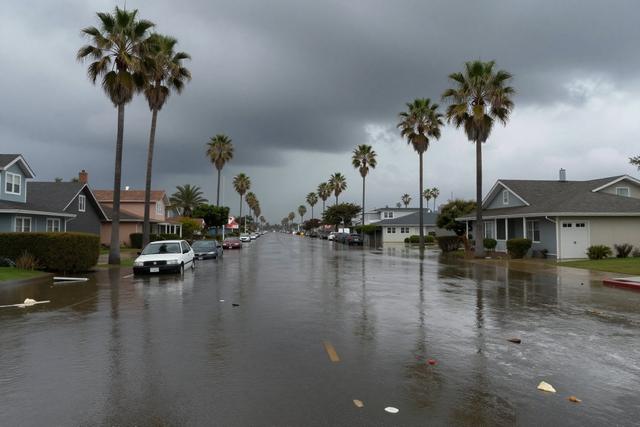
On September 7, 2026, residents of Long Beach and Seal Beach woke to water spilling onto streets and homes after high surf generated by Storm Marie overtopped coastal berms. The surge of water moved inland, flooding low‑lying neighborhoods and leaving debris in its wake.
The unusually high surf produced by the storm rolled along the Southern California coastline, reaching heights that exceeded the design capacity of the protective berms that line the beachfront. As the waves broke, the berms were breached, allowing seawater to flow onto the adjacent residential areas. Residents reported that the water entered yards, garages, and some ground‑floor rooms, creating immediate concerns for property damage.
Local authorities responded by deploying emergency crews to assist affected households and to clear debris that had been carried ashore. The cleanup effort focused on removing sand, seaweed, and other material that had been deposited by the surf. Utility services were monitored to ensure that power and water supplies remained stable despite the flooding.
Storm Marie’s impact on Long Beach and Seal Beach underscores the vulnerability of coastal communities when protective structures are overwhelmed. While the flooding was confined to specific neighborhoods near the shoreline, officials noted that the event highlighted the need for ongoing assessment of berm effectiveness as surf conditions become more extreme.