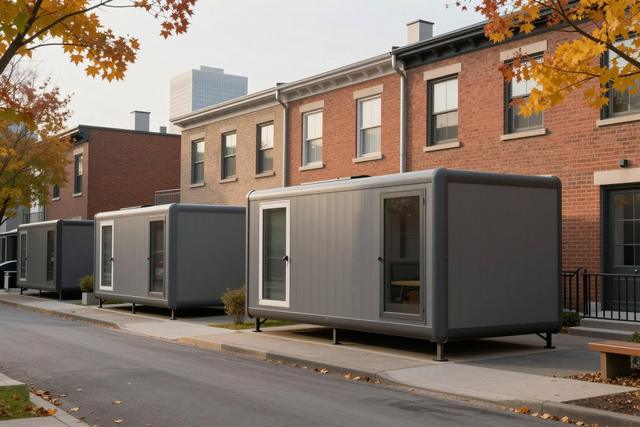
In the coming months, 54 women experiencing homelessness in the Côte-des‑Neiges–Notre‑Dame‑de‑Grace borough of Montreal will be relocated to newly built prefabricated transitional housing units. The move is part of a rent supplement program that will cap each resident’s rent payment at 25 percent of her income.
The modular units, constructed off‑site and assembled on municipal land, represent the city’s latest effort to expand affordable housing options for people without stable shelter. By providing a fixed, low‑cost rent ceiling, the program aims to ensure that housing costs remain manageable for the women as they work toward longer‑term stability.
Officials overseeing the initiative said the modular approach allows for quicker deployment compared with traditional construction, addressing the pressing demand for shelter in Montreal’s ongoing homelessness crisis. The units are designed for transitional use, offering residents a temporary but secure living environment while they pursue employment, education, or other pathways to permanent housing.
The rent supplement program will calculate each participant’s contribution based on her reported income, ensuring that no more than a quarter of earnings go toward rent. This structure is intended to alleviate the financial burden that often forces individuals back onto the streets.
Montreal’s municipal authorities have highlighted the addition of modular housing as a key component of a broader strategy to reduce the city’s homeless population. The focus on women reflects a recognition of the specific vulnerabilities faced by female individuals experiencing homelessness, including safety concerns and access to supportive services.
While the exact timeline for each family’s move will be coordinated with service providers, the city expects the transition to begin shortly and continue over the next several months, gradually filling all 54 units.
The initiative marks a concrete step toward expanding shelter capacity and providing stable, affordable housing for a segment of the population that has long been underserved in the region’s efforts to combat homelessness.