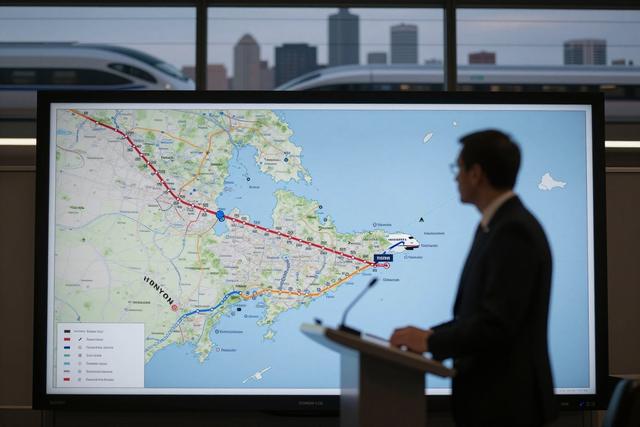
On June 10, 2026, Martin Imbleau, president and chief executive of Alto, defended the planned route of the high‑speed rail line linking Quebec City and Toronto after criticism that the project's cost would more than double.
The route, intended to connect the two provinces, has been promoted as a major infrastructure initiative. Critics, including the Parti Québécois and the Bloc Québécois, argue that the budget has risen sharply, now estimated at about $200 billion, far above original projections.
Imbleau's defense came as opposition parties raised the escalating budget as a political flashpoint. He maintained that the chosen alignment remains the most viable option for delivering the service, emphasizing the project's long‑term benefits without providing additional specifics.
The high‑speed rail proposal has drawn scrutiny from both federal and provincial leaders. While supporters cite potential reductions in travel time and environmental advantages, opponents focus on the financial implications and question whether the cost escalation can be justified.
The debate over the $200 billion estimate reflects broader concerns about large‑scale infrastructure spending in Canada. The Parti Québécois and the Bloc Québécois have called for a reassessment of the project's financial outlook and have urged greater transparency in budgeting.
As the discussion continues, Alto remains committed to advancing the project according to its original timetable. The company has not disclosed any changes to the route or schedule in response to the criticism.
The controversy underscores the tension between ambitious transportation plans and fiscal prudence, with the Quebec‑Toronto high‑speed rail line poised to remain a central issue in upcoming political deliberations.