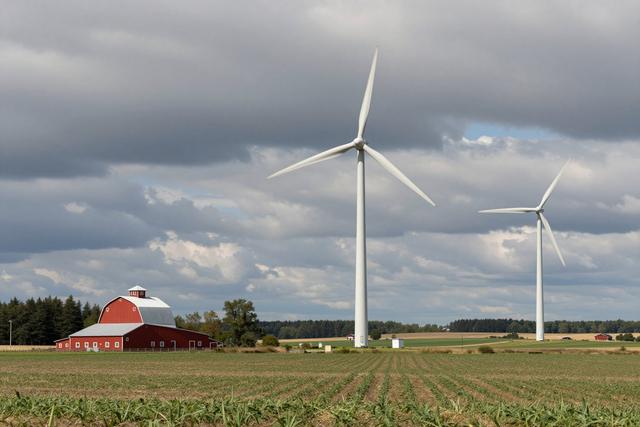
Farmers in Quebec’s Montérégie region have voiced opposition to a newly proposed renewable‑energy installation that would generate 100 megawatts of power. The plan, announced by the local municipality, calls for wind turbines to be sited on agricultural land, prompting a wave of concern among the area’s farming community.
The municipality’s proposal outlines a wind farm capable of delivering a hundred megawatts of electricity, a capacity that would contribute to Quebec’s broader effort to expand its clean‑energy portfolio. The project is slated to be built on parcels of farmland that currently support a variety of crops and livestock operations.
Local growers argue that the presence of turbine structures could interfere with farming activities. Their apprehensions focus on the potential for reduced usable land, disruption of soil conditions, and the logistical challenges of maintaining equipment in proximity to crops and livestock. While the exact technical impacts have not been detailed, the farmers stress that any alteration to their fields could affect productivity and long‑term viability of their farms.
Municipal officials who put forward the wind farm contend that the project aligns with provincial goals to increase renewable‑energy capacity and reduce reliance on fossil fuels. They point to the economic benefits of clean‑energy infrastructure, including job creation and possible revenue streams for the community. The municipality has not disclosed specific mitigation measures aimed at preserving agricultural use of the land.
The dispute reflects a growing tension in Quebec as the province pursues ambitious renewable‑energy targets while rural areas grapple with the implications of new installations on traditional land uses. Stakeholders are expected to engage in further consultations to address the farmers’ concerns and determine whether the wind turbines can coexist with active farmland. The outcome will likely influence how future projects balance energy objectives with agricultural preservation in the region.