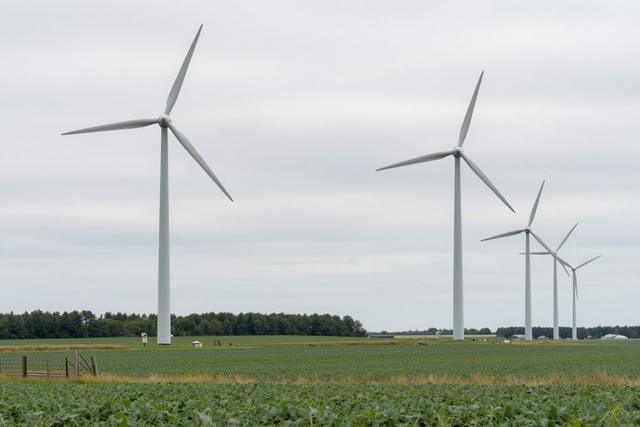
Farmers in Quebec’s Montérégie region and a municipal authority have voiced opposition to a proposed 100‑megawatt wind‑energy development that would locate turbines on agricultural land. The plan, announced earlier this year, calls for a series of wind turbines to be installed across farmland in the area, prompting concerns that the structures could interfere with crop production and other farming activities.
Local growers argue that the presence of large turbines may limit the use of fields for planting, harvesting and livestock management, potentially reducing the viability of their operations. The municipality that would host the project has joined the farmers in expressing reservations, noting that the region’s economy relies heavily on agriculture and that any disruption could have broader economic implications.
The proposal is part of Quebec’s broader strategy to expand renewable‑energy capacity, particularly wind power, in locations that also support agriculture. Provincial officials have highlighted the need for clean energy to meet climate targets, but the Montérégie opposition underscores the tension between energy development and the preservation of productive farmland. While the project’s supporters point to the environmental benefits of a 100‑megawatt installation, the dissenting voices stress that the balance between green infrastructure and agricultural land use has yet to be adequately addressed.
As discussions continue, the farmers and municipal leaders are seeking modifications to the project’s design or location that would mitigate the impact on farmland. The outcome will likely influence how future renewable‑energy initiatives are planned in regions where agriculture remains a dominant land use.
The debate in Montérégie reflects a larger provincial conversation about integrating wind energy into the landscape without compromising the agricultural sector that underpins many rural communities.