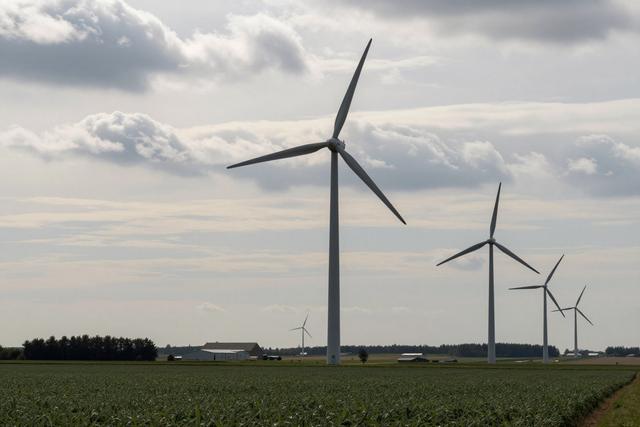
Farmers in Quebec’s Montérégie region have publicly objected to a newly proposed renewable‑energy initiative that would install wind turbines capable of generating 100 megawatts of power. The plan, announced on June 28, 2026, calls for the turbines to be sited on farmland within the area, prompting immediate concern among the agricultural community.
The project envisions a wind‑farm of sufficient size to deliver the stated capacity, with turbines to be placed on parcels currently used for crop production and livestock. While the proposal is framed as a step toward cleaner energy, the location of the turbines on cultivated land has become the central point of dispute.
Local farmers argue that the presence of large turbines could interfere with farming operations, reduce usable acreage, and potentially affect soil conditions and crop yields. Their opposition is rooted in the belief that the installation would compromise the productivity of land that supports a significant portion of Quebec’s food supply.
Montérégie is recognized as one of the province’s most important agricultural zones, contributing a substantial share of Quebec’s farm output. The region’s farmers have historically defended the integrity of their fields against encroachments that might limit agricultural activity. The current controversy illustrates a broader tension between provincial energy‑development objectives and the preservation of farmland that sustains both local economies and food security.
As the proposal moves forward, the farmers’ objections are expected to shape discussions with regulators and developers. The outcome will likely influence how future renewable‑energy projects are planned in areas where agriculture plays a vital role, balancing the demand for clean power with the need to protect productive land.