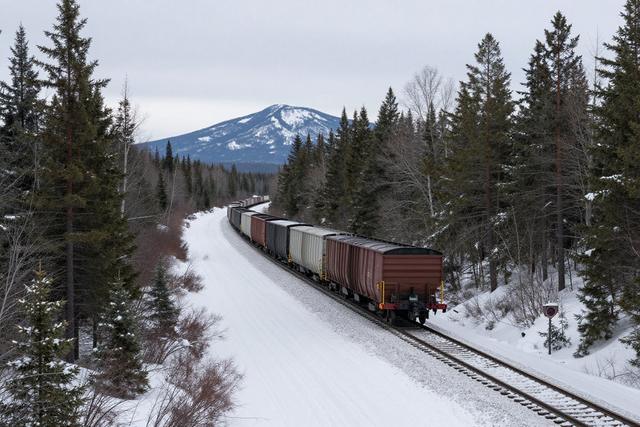
A federal agency has concluded that rapid temperature fluctuations and a wheel defect identified on a prior train were key contributors to a train derailment that occurred in northern Quebec in December. The agency’s findings were released after a formal investigation into the incident.
The derailment, which prompted an immediate safety review, involved a freight train traveling through the remote region of northern Quebec. Following the accident, officials launched a probe to determine the underlying causes. The investigation examined track conditions, equipment performance, and environmental factors that could have affected the train’s stability.
Analysis by the agency highlighted that sudden changes in temperature created stress on both the rails and the train’s components. The rapid swing between cold and milder conditions was found to expand and contract metal parts, potentially compromising the integrity of the wheel‑rail interface. This thermal stress was identified as one of the environmental elements that heightened the risk of derailment.
In addition to the temperature factor, the agency identified a wheel defect that had been recorded on a preceding train running the same route. The defect, noted in maintenance logs, was not fully resolved before the December service. investigators determined that the lingering issue could have weakened the wheel’s ability to maintain proper alignment, making it more vulnerable when exposed to the identified temperature swings.
The combined effect of the temperature‑induced stress and the unresolved wheel defect led the agency to attribute the derailment to these interacting factors. The findings underscore the importance of monitoring both environmental conditions and equipment health in remote rail corridors. The federal agency indicated that recommendations will be issued to improve inspection protocols and to consider temperature‑related risks in future operational planning.