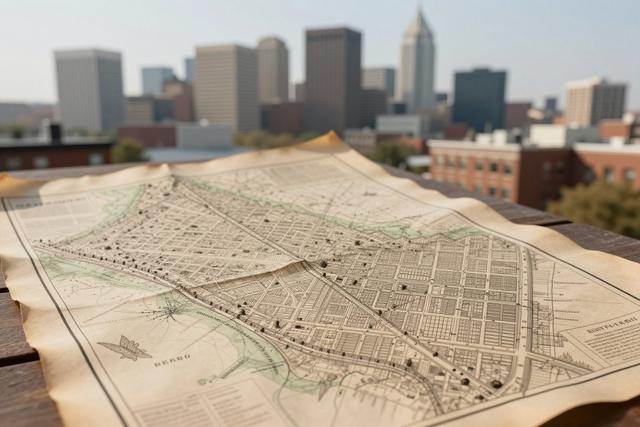
Geneviève Pronovost, a specialist in early Montreal history, has detailed the origins of the city’s first seven street names, showing how they were laid out by the settlement’s earliest toponymist to serve the future Notre‑Dame church. The streets, part of an orthogonal grid created in the 17th‑century, were intended to streamline movement toward the planned religious centre.
Pronovost’s research points to François Dollier de Casson, a Sulpician missionary, as the architect of the initial street plan. Dollier de Casson’s design placed the avenues at right angles, forming a regular pattern that contrasted with the irregular paths of earlier settlements. This layout was a deliberate effort to improve access to the site where the Notre‑Dame church would later be built, reflecting the central role of the church in the colony’s social and spiritual life.
The seven arteries received names that reflected the priorities and influences of the time. Each name was chosen to aid navigation and to embed the new settlement’s identity within the broader French colonial framework. By assigning clear, functional names, Dollier de Casson provided a framework that would guide residents and visitors alike, reinforcing the grid’s purpose of facilitating movement toward the church and surrounding public spaces.
Pronovost’s findings place the street‑naming initiative within the larger context of Montreal’s early urban planning. The orthogonal plan, unusual for the era, demonstrated an early understanding of city design that prioritized order, accessibility, and the prominence of religious institutions. The historian notes that the seven streets set a precedent for later expansions, establishing a naming convention that would shape Montreal’s growth for centuries.
The study underscores the lasting impact of Dollier de Casson’s vision, linking the city’s modern layout to its foundational moments. By tracing the origins of these first seven streets, Pronovost highlights how early planning decisions continue to influence Montreal’s urban fabric today.