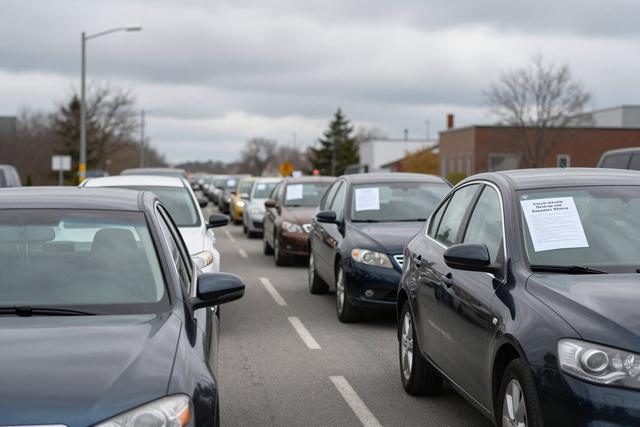
On June 27, 2026, the city of Mercier formally presented a petition to the Quebec provincial government urging immediate action to alleviate the chronic traffic congestion that plagues Route 138 on Montreal’s South Shore. Municipal officials framed the petition as a response to mounting frustration among residents who contend with daily gridlock on the arterial road.
The petition, signed by local officials and supported by a broad cross‑section of Mercier’s population, requests that the province allocate resources and develop a coordinated plan to improve traffic flow on Route 138. City leaders emphasized that the bottleneck not only hampers commuter journeys but also impacts local businesses and emergency services that rely on timely travel.
Residents have voiced long‑standing concerns about the severity of the congestion, describing it as a persistent obstacle to daily life. While specific traffic statistics were not disclosed, the community’s sentiment reflects a pattern of prolonged delays that have become a defining feature of the corridor. The petition seeks concrete measures such as infrastructure upgrades, signal optimization, and possible expansion of alternative routes to distribute vehicle volume more evenly.
The appeal to the provincial government aligns with a broader history of Route 138’s traffic challenges on the South Shore. Municipal leaders have previously highlighted the road’s capacity issues, noting that the corridor serves as a key conduit for commuters traveling between Montreal and surrounding suburbs. By escalating the matter to the provincial level, Mercier hopes to secure the attention and funding necessary to implement lasting solutions.
Quebec officials have not yet issued a response to the petition, but the city’s initiative underscores the urgency felt by Mercier’s citizens. The outcome of the request could set a precedent for how provincial authorities address similar congestion problems across the region.
The petition represents a collective effort by Mercier’s government and its residents to prompt decisive action on a transportation issue that has long affected the South Shore’s mobility and quality of life.