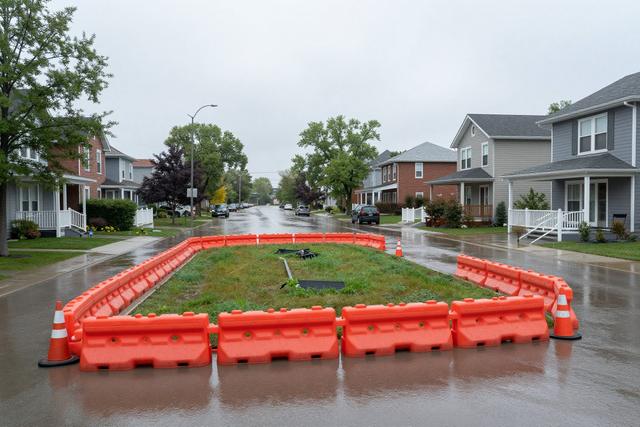
City officials announced on Saturday, June 20, 2026, that Montreal and the West Island municipalities will move forward with a series of flood‑mitigation projects aimed at curbing the damage caused by recent flash flooding. The plan includes the creation of sponge parks and the construction of retention basins designed to absorb excess rainwater and reduce the flow into residential areas that have been repeatedly inundated.
The decision follows a bout of torrential rain that swept across the West Island, flooding homes and prompting emergency responses. Municipal leaders noted that this event marks the fourth significant flooding episode in the area since 2017, underscoring a pattern of vulnerability to intense precipitation.
In response, the city’s engineering department will work with local municipalities to identify suitable sites for sponge parks—landscaped areas that retain water and release it slowly back into the ground. Retention basins, another component of the strategy, will be positioned to capture runoff from streets and convey it away from vulnerable neighborhoods. Both measures are intended to function as long‑term safeguards rather than temporary fixes.
Officials emphasized that the new infrastructure will complement existing drainage systems, which have struggled to cope with the volume of water generated by the recent storms. The collaborative approach reflects a broader effort to address the recurring nature of flash floods that have plagued the West Island over the past decade.
While detailed timelines and budgets for the projects were not disclosed, city representatives indicated that design work will commence shortly, with construction phases to follow as land parcels are secured. The initiative aims to enhance community resilience and protect property from future deluges.
The announcement comes as residents continue to assess damage from the latest flooding, and it signals a shift toward proactive planning to mitigate the impact of increasingly frequent extreme weather events in the region.