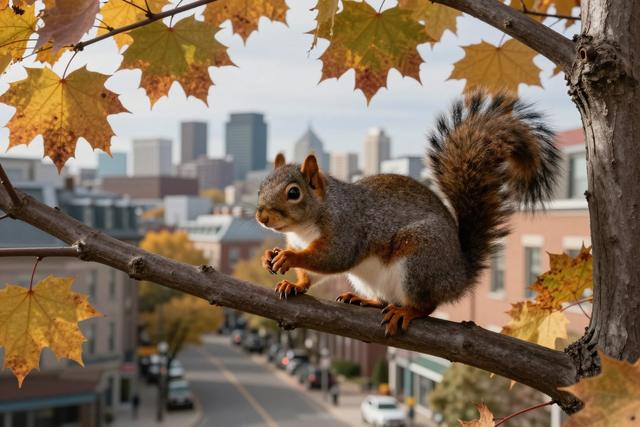
A study conducted by researchers at McGill University and released on Wednesday reveals that the coat colour of eastern gray squirrels in Montreal changes according to the neighbourhood in which they live. The investigation found that local environmental conditions within each area appear to influence whether the squirrels display the species' typical gray fur or the less common black variant.
Eastern gray squirrels are a familiar sight throughout the city, and while most individuals exhibit the standard gray pelage, a noticeable number of squirrels in certain districts show a black coat. The McGill team examined this pattern and linked the variation directly to the specific surroundings of each neighbourhood, suggesting that factors such as habitat characteristics, food sources, or microclimate may play a role in shaping the animals' appearance.
The research underscores how urban ecosystems can affect wildlife traits at a very localized level. By mapping the distribution of fur colour across different parts of Montreal, the scientists highlighted the city's ecological diversity and the way it can manifest even in a single species. The findings add to the broader understanding of how city environments influence animal adaptation.
While the study confirms a clear relationship between neighbourhood conditions and squirrel fur colour, it does not specify the precise mechanisms behind the change. The results nevertheless point to the importance of considering fine-grained environmental variation when assessing urban wildlife. The researchers hope that future work will explore the specific factors driving the colour shift and examine whether similar patterns occur in other urban species.
The discovery provides a vivid illustration of how urban settings can shape the biology of common city residents, offering a new perspective on the interplay between human‑altered landscapes and the animals that share them.