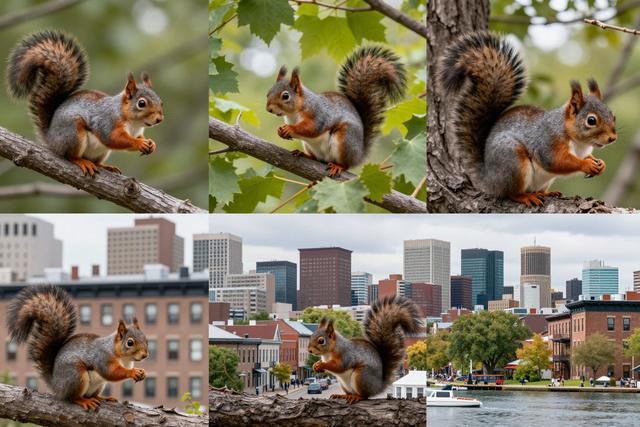
Squirrels roaming the streets and parks of Montreal have been noted to display distinct fur colors that correspond to the neighborhoods in which they live, according to observations recorded on September 24, 2026. The pattern suggests that local environmental conditions are influencing the physical characteristics of the city’s rodent population.
The variation appears across the city’s many districts, each offering its own mix of vegetation, building density, and micro‑climate. In areas where tree cover is dense and shade abundant, squirrels tend to exhibit darker coats, while neighborhoods with more open spaces and lighter ground cover see individuals with lighter fur. These differences align with the broader understanding that wildlife can adapt its appearance to match surrounding habitats.
Experts in urban ecology point to Montreal’s patchwork of micro‑environments as a key factor behind the observed changes. The city’s geography includes waterfronts, historic boroughs, modern high‑rise zones, and extensive green corridors, each creating unique conditions for temperature, humidity, and predator exposure. Such factors can drive natural selection or phenotypic plasticity, leading to the emergence of locally adapted traits.
The findings add to a growing body of evidence that urban ecosystems are not uniform and that wildlife responds to subtle variations within a single metropolitan area. While the observations do not include specific measurements or detailed genetic analysis, they underscore the role of city planning and landscape diversity in shaping the appearance of animal residents.
Further study may clarify the mechanisms behind the color shifts and determine whether they reflect short‑term adaptations or longer‑term evolutionary changes. For now, the differing coats of Montreal’s squirrels provide a visible reminder of the city’s ecological complexity.