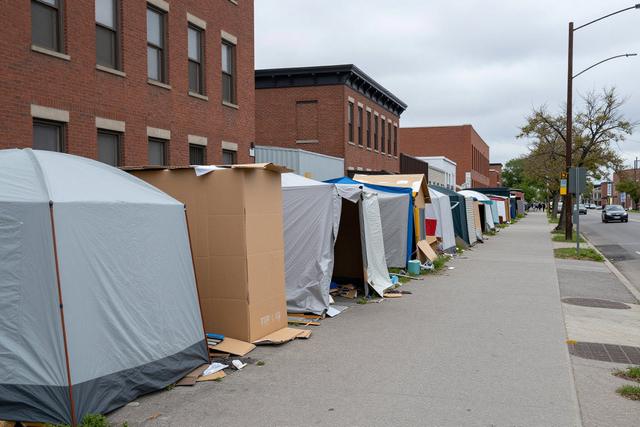
Montreal’s ombudsman announced on June 15, 2026 that conditions for itinerant individuals in the city’s Milton‑Parc neighbourhood have not improved and that the intensity and complexity of the related challenges are on the rise. The official statement highlighted a worsening of the situation for people without stable housing in the area.
Milton‑Parc, a district in Montreal, has long been noted for a visible itinerant population. Over the years, local authorities and community groups have monitored the presence of people experiencing homelessness, but the ombudsman’s latest assessment indicates that recent efforts have failed to produce measurable progress. The report points to an escalation in the range of issues confronting itinerant residents, suggesting that factors such as access to basic services, safety concerns, and social support are becoming increasingly intertwined.
The ombudsman’s findings come amid broader municipal discussions about how to address homelessness across Montreal. While the statement does not provide specific statistics, it underscores that the problems faced by itinerant individuals in Milton‑Parc are not only persisting but also growing more complicated. The assessment calls attention to the need for a more coordinated response that can handle the layered nature of the challenges, from health and housing to community integration.
Stakeholders in the neighbourhood, including local service providers and residents, have historically expressed concern over the visible presence of people without stable housing. The ombudsman’s report reinforces those long‑standing worries, indicating that the situation has not only remained static but has become more demanding in terms of resources and policy attention.
The statement serves as a formal acknowledgment from the city’s oversight office that the conditions for itinerant people in Milton‑Parc are deteriorating. It signals a call for renewed focus on comprehensive strategies that can address both the immediate needs of the homeless population and the broader systemic factors contributing to the heightened complexity of the issue.