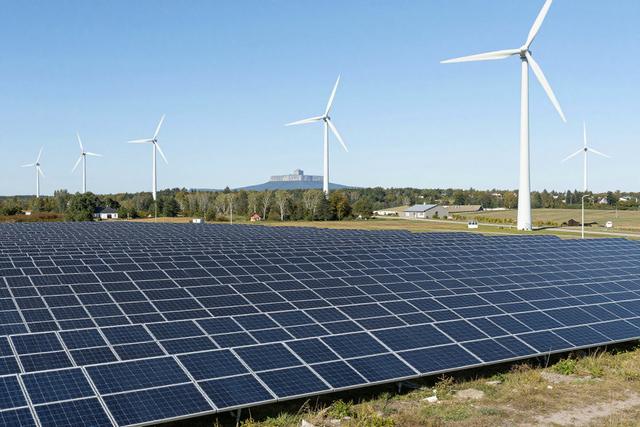
The Quebec government announced on Tuesday that it intends to raise the share of renewable energy in the province’s total consumption to 77 percent by the year 2050. The target marks a substantial increase from the current level, where renewable sources account for roughly 48 percent of Quebec’s energy use.
The announcement was made as part of the province’s long‑term energy strategy, outlining the ambition to expand the contribution of clean power over the next three decades. Officials indicated that the new goal will guide future investments and policy decisions aimed at accelerating the transition toward greener electricity and heat generation.
At present, almost half of the province’s energy is derived from renewable resources, a figure that reflects Quebec’s extensive hydroelectric infrastructure and growing wind and solar capacities. The government’s plan seeks to build on this foundation, pushing the proportion of renewable supply well beyond the existing 48 percent.
While the precise measures to achieve the 77‑percent objective were not detailed in the brief statement, the target provides a benchmark for upcoming projects, regulatory adjustments, and potential collaborations with industry stakeholders. The goal aligns with broader provincial and national objectives to reduce carbon emissions and promote sustainable development.
The 2050 benchmark will serve as a reference point for evaluating progress in the coming years, with periodic assessments expected to track how close the province moves toward the 77‑percent renewable share. The government emphasized that meeting the target will require coordinated effort across multiple sectors, including energy producers, municipalities, and consumers.
By setting a clear numerical aim, Quebec joins other jurisdictions in defining long‑term renewable energy aspirations, positioning the province for a future where a majority of its power comes from environmentally friendly sources.