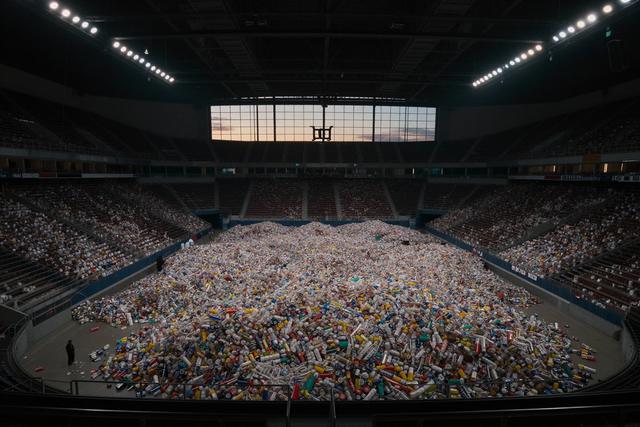
Quebec discards an estimated 4.2 billion consigned containers each year, a volume that would fill the province’s Olympic Stadium twice, according to data from Con$inge Inc.
The figure reflects the outcome of the province’s deposit‑return system, which was introduced to encourage recycling of single‑use beverage containers. Under the scheme, consumers pay a small deposit when purchasing a container and receive a refund when the item is returned to a collection point. While the system succeeds in reclaiming a portion of containers, the remaining unreturned items are ultimately treated as waste.
The scale of the discarded containers highlights the sheer quantity of single‑use packaging that circulates in Quebec. The 4.2 billion units represent the total number of containers that pass through the deposit‑return network and are not reclaimed for recycling or reuse. When compared to the capacity of the Olympic Stadium, the discarded volume illustrates the magnitude of the waste stream generated each year.
Provincial authorities oversee the deposit‑return program, which aims to reduce litter and increase material recovery. The annual discard rate suggests that a substantial share of containers still ends up in landfills or incineration facilities despite the financial incentive to return them. The data provided by Con$inge Inc. underscores the challenge of achieving higher return rates within the existing framework.
Environmental groups have previously noted the importance of improving consumer participation and expanding collection infrastructure. The current statistics provide a baseline for measuring future progress as the province evaluates potential adjustments to the deposit system, such as increasing deposit values or enhancing public awareness campaigns.
The 4.2 billion‑container figure serves as a benchmark for policymakers, industry stakeholders, and the public as Quebec continues to address the environmental impact of its beverage packaging waste.