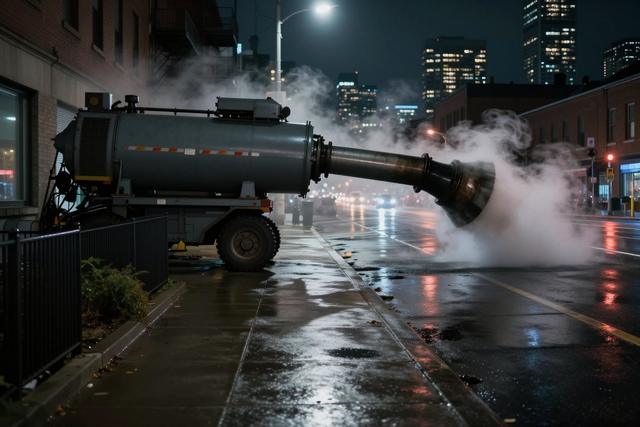
The distinctive roar of Montreal’s subway system was heard on Toronto streets on August 16, 2026, generated not by a train but by waste‑vacuum equipment operated by the Quebec‑based firm Exprolink. Residents and passersby reported the familiar rumble, a sound normally associated with the underground network in Montreal, resonating above ground in the city of Toronto.
Exprolink, a company that provides waste‑vacuum services, uses specialized machinery to collect and transport refuse. On the day in question, the machines produced a noise that mimics the characteristic hum of the Montreal metro, creating an unexpected auditory experience for those in the vicinity. The sound’s similarity to the subway was noted by multiple observers, prompting curiosity about its origin.
The appearance of this particular acoustic signature in Toronto is directly linked to the operation of Exprolink’s equipment. The company, headquartered in Quebec, employs waste‑vacuum units that, as part of their normal function, emit a sound that can be mistaken for the Montreal underground train. The incident highlights how industrial machinery can generate noises that are recognizable beyond their intended context.
While the sound was surprising to Toronto listeners, it underscores the cross‑regional presence of Exprolink’s services. The company’s waste‑vacuum units, designed for efficient refuse removal, inadvertently brought a piece of Montreal’s auditory landscape to a different city. No further incidents were reported, and the noise was confined to the operation of the equipment on that day.
The event serves as a reminder that sounds associated with specific locales can travel far beyond their usual boundaries when technology and industry intersect. On August 16, 2026, Toronto’s streets briefly echoed the familiar cadence of Montreal’s subway, courtesy of Exprolink’s waste‑vacuum machinery.