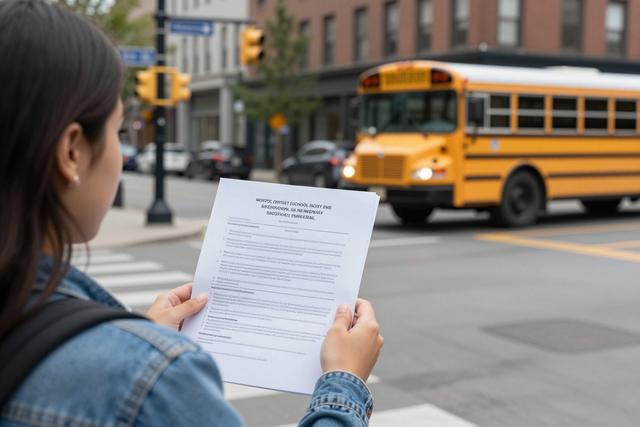
A student submitted a petition to the Quebec National Assembly on June 10, 2026, seeking tighter safety measures around school‑zone traffic. The request was formally presented to Alexandre Masse, a member of the Assembly, in Montreal. The petition calls for changes to traffic conditions at school drop‑off and pickup points, citing a recent near‑miss incident in which the student narrowly avoided an accident while crossing the street to school.
The filing follows growing concerns among students and parents about congestion and safety in areas surrounding schools. Those concerns have been voiced repeatedly in community meetings and through local advocacy groups, which argue that current traffic patterns place children at risk during peak arrival and departure times. The petition outlines specific adjustments, including improved signage, reduced speed limits, and designated crossing zones, though the document itself does not list detailed figures.
Legislators have noted the increase in traffic volume around educational facilities across Quebec and have indicated that the issue will be examined in upcoming sessions of the National Assembly. Alexandre Masse acknowledged receipt of the petition and confirmed that it will be reviewed alongside other proposals aimed at enhancing pedestrian safety in urban environments.
While the petition does not provide a timeline for implementation, its submission marks a formal step by students and families toward legislative action. The move reflects a broader trend of community groups seeking direct engagement with provincial authorities to address road safety and protect school‑age children from traffic hazards.
The Assembly’s response will be monitored by local stakeholders, who anticipate that any policy adjustments could influence traffic management practices not only in Montreal but throughout the province, potentially setting new standards for school‑zone safety.
The student’s initiative underscores the role of civic participation in prompting governmental review of public safety measures, especially in areas where daily traffic interacts closely with vulnerable pedestrians.