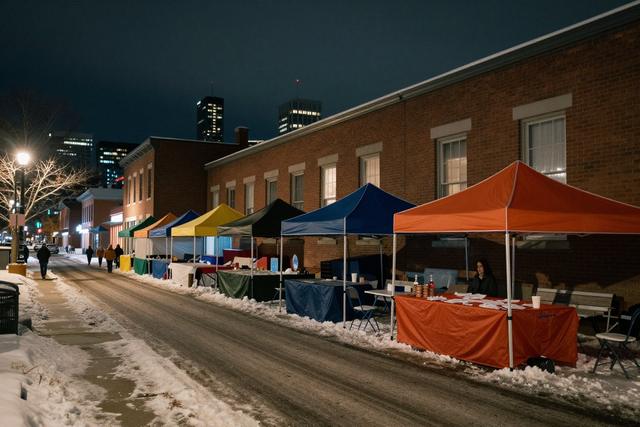
On July 29, 2026, a collection of tents was set up in Cartierville, a residential area of Montreal, Quebec, creating a makeshift homeless encampment in the neighbourhood.
The temporary structures were arranged in a cluster that resembles other informal shelters seen elsewhere in the city. The location, typically characterized by family homes and quiet streets, now includes a visible presence of people living in tents.
This development is part of a broader pattern in Montreal, where homelessness is moving beyond traditional downtown and industrial zones into more suburban and residential districts. Recent observations indicate that makeshift camps are increasingly appearing in neighborhoods that have not previously hosted such settlements.
City officials and community groups have noted the shift, acknowledging that the spread of homelessness into areas like Cartierville adds new challenges for local residents and municipal services. While specific responses to the Cartierville encampment have not been detailed, the appearance underscores the ongoing expansion of the homelessness issue across the city’s varied neighborhoods.
Residents of Cartierville are now faced with the immediate reality of an encampment in their streets, prompting conversations about safety, public health, and the need for supportive housing solutions. The situation reflects a larger municipal concern as the city grapples with rising numbers of individuals without permanent shelter and the search for effective interventions.
As the encampment remains in place, its presence serves as a tangible reminder of the evolving nature of homelessness in Montreal, highlighting the importance of coordinated efforts to address the needs of vulnerable populations while maintaining the character of residential communities.