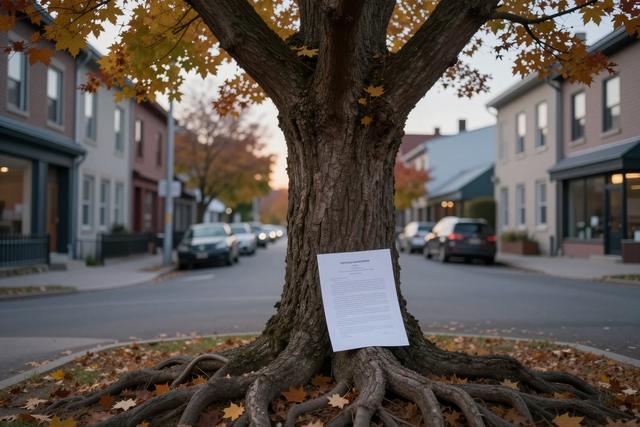
On June 21, 2026, the municipal council of Terrasse‑Vaudreuil, a small community located west of Montreal in Quebec, formally recognized trees as living beings entitled to legal rights. The resolution marks a rare step in Canadian local governance, extending the law’s reach to include vegetation as entities with protections.
The adopted policy treats trees as subjects of law rather than merely property or resources. Under the new framework, any municipal action that could damage a tree will be subject to legal review, and officials are required to consider the rights of trees when making decisions about land use, development, or maintenance. While the text of the resolution does not specify penalties, it establishes a legal standing for trees that could be invoked in future disputes.
Terrasse‑Vaudreuil, known for its residential neighborhoods and a network of green spaces, has positioned itself at the forefront of a growing movement that seeks to embed ecological considerations within legal structures. The town’s decision follows broader conversations across Canada about how to better protect natural environments amid urban expansion and climate concerns.
By granting trees legal recognition, the municipality may influence how permits for construction, road work, or landscaping are evaluated. Officials will need to balance traditional planning priorities with the newly affirmed rights of trees, potentially leading to revised procedures for assessing environmental impact.
The resolution reflects an evolving perspective that views natural elements as participants in the legal system, rather than passive background. As other jurisdictions observe Terrasse‑Vaudreuil’s approach, the policy could inspire similar measures elsewhere, contributing to a gradual reshaping of how communities integrate environmental stewardship into their legal and administrative practices.
The town’s action underscores a shift toward acknowledging the intrinsic value of living organisms within municipal governance, positioning Terrasse‑Vaudreuil as a notable example of progressive environmental policy in the province.