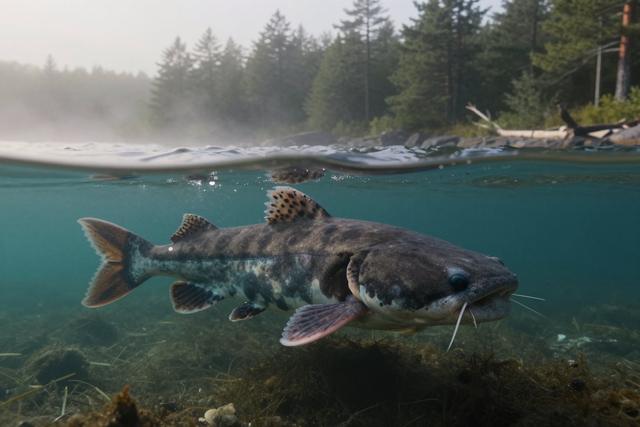
Researchers have identified a transmissible melanoma cancer affecting approximately one third of the brown bullhead catfish in Lake Memphremagog, a body of water that straddles the Quebec‑Vermont border. The finding was reported on Sunday, July 26, 2026.
The research team, working on the lake’s fish population, discovered that the melanoma can spread from one catfish to another, marking the first documented case of a transmissible cancer in a fish species. Laboratory analysis confirmed the presence of malignant cells that appear to be passed between individuals.
Brown bullhead catfish are a common inhabitant of Lake Memphremagog. The lake’s ecosystem supports a diverse range of aquatic life, and the catfish constitute a significant portion of its fish community. The proportion of affected individuals, estimated at roughly 33 percent, suggests that the disease is widespread within this population.
The researchers emphasized that transmissible cancers are rare in vertebrates and have previously been documented only in a handful of mammals, such as Tasmanian devils and certain dogs. The discovery in fish expands the known range of species capable of harboring cancers that can move between hosts without the need for traditional infection pathways.
Ongoing monitoring of the lake’s catfish will aim to track the progression of the disease and assess potential impacts on the broader ecosystem. The study also provides a new model for investigating how cancers can evolve mechanisms for direct transmission in aquatic environments.
The identification of this transmissible melanoma adds a new dimension to the scientific understanding of disease dynamics in freshwater habitats and may inform future research on disease management in shared water resources that span international borders.