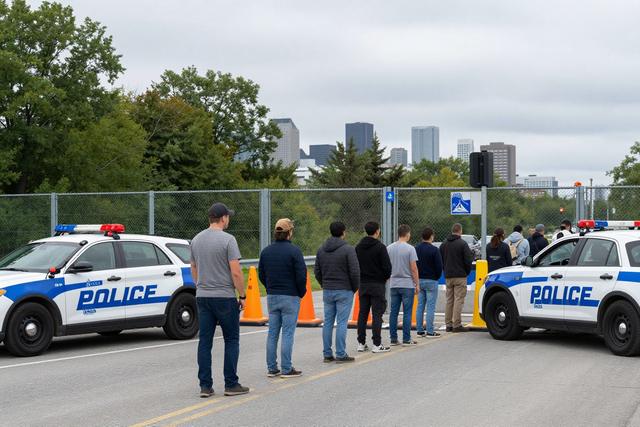
U.S. authorities announced on Tuesday, June 30, that they have observed a pronounced increase in illegal border crossings originating in Quebec’s Estrie region and entering the United States via Vermont. The report highlighted a shift in migration patterns, noting that more individuals are attempting to move north‑south across the border than in recent months.
The Estrie region, situated along the southern edge of Quebec, shares a lengthy boundary with the state of Vermont. Officials said that the area has become a gathering point for people from a variety of countries who are seeking to cross into the United States without authorization. Once assembled in Estrie, these individuals make attempts to traverse the border, where they are intercepted by U.S. border agents.
According to the statement released by U.S. officials, those intercepted at the border represent a diverse set of nationalities. The report did not specify particular countries of origin, but emphasized that the group includes people from many different parts of the world. The diversity of backgrounds underscores the broader international dimension of the migration flows affecting the northern border.
U.S. authorities said they are monitoring the situation closely and continue to enforce existing border security measures. While the increase in crossings has been described as significant, officials did not provide exact figures or compare the current levels to previous periods. The focus remains on processing and managing individuals who are apprehended during illegal entry attempts.
The surge in activity along the Quebec‑Vermont corridor adds to ongoing discussions about border management in the region. Officials on both sides of the border have been coordinating efforts to address the rise in unauthorized movements, though the report refrained from detailing specific collaborative actions.
The development signals a heightened level of activity in the Estrie‑Vermont crossing zone, prompting continued vigilance by U.S. border enforcement agencies as they respond to the evolving pattern of illegal entries.