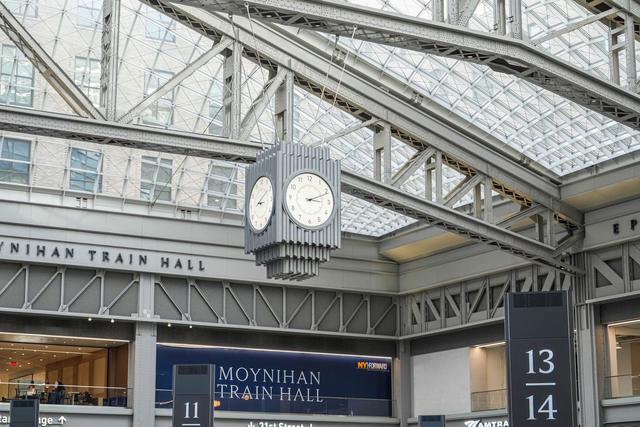
On August 14, 2026, a coalition of privacy advocates, local lawmakers and artists gathered outside Moynihan Train Hall, directly across from Madison Square Garden, to demand an end to facial‑recognition scanning at the arena. The demonstration was organized to support New York City Council Member Shahana Hanif’s pending legislation that would prohibit biometric surveillance in public venues such as MSG.
Participants positioned themselves near the main entrance of the train hall, a high‑traffic point for concert‑goers and sports fans heading to the Garden. Their presence highlighted growing concern among civil‑rights groups about the collection and storage of facial‑recognition data without clear consent. The rally called for the city to impose restrictions on the entry‑scan system that currently records patrons’ biometric information as they pass through security checkpoints.
Council Member Hanif, representing a Brooklyn district, has introduced a bill that seeks to ban the use of biometric identification technologies in public accommodations. The proposed law would require venues to obtain explicit permission before gathering facial data and would set limits on how long such data could be retained. Privacy organizations have been urging city officials for months to adopt stronger safeguards, arguing that unchecked surveillance threatens individual liberty and could be misused.
The event also drew several artists who perform at Madison Square Garden, adding a cultural dimension to the protest. They joined the call for transparency, emphasizing that audiences should be aware of the technology used to monitor them. While the demonstration remained peaceful, it underscored a broader debate within New York City about balancing security measures with privacy rights.
City officials have not yet issued a formal response to the rally or to Hanif’s proposal. The outcome of the legislation remains uncertain, but the gathering at Moynihan Train Hall demonstrates that a segment of the public and elected representatives are actively pushing for stricter controls on biometric data collection in public spaces.