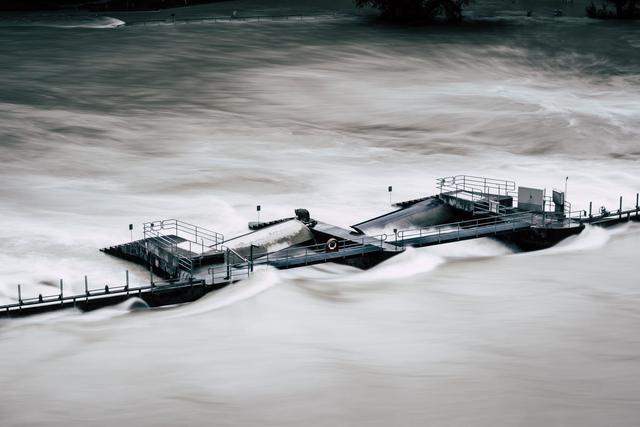
A line of fast‑moving storms swept through New York City and neighboring New Jersey on Sunday morning, August 23, 2026, leaving numerous streets and low‑lying neighborhoods flooded as heavy rain outpaced drainage systems.
The storms advanced quickly across the region, delivering intense rainfall in a short period. The rapid pace prevented stormwater from being absorbed or diverted, and municipal drainage infrastructure was unable to keep up with the volume of water. As a result, water collected on roadways, in alleys and in residential areas situated near the water table.
City officials observed water accumulation in several low‑lying streets throughout Manhattan, Brooklyn, the Bronx and parts of Queens, while adjacent communities in New Jersey reported similar conditions. The flooding was confined to surface water; there were no reports of river or creek overflow at the time of writing.
Emergency response teams were dispatched to monitor the situation and to assist motorists and pedestrians encountering standing water. Temporary barriers and sandbags were placed in the most affected corridors to redirect flow and protect vulnerable structures. Residents were advised to avoid travel through inundated zones until water levels receded.
The event underscores the challenges that fast‑moving convective systems pose to urban drainage networks, particularly in densely built environments where permeable surfaces are limited. While the storms moved on within hours, the residual water left pockets of disruption across both states.
Authorities continue to assess damage and to clear debris once the water subsides. No injuries have been reported, and normal traffic patterns are expected to resume as streets are drained and cleaned.