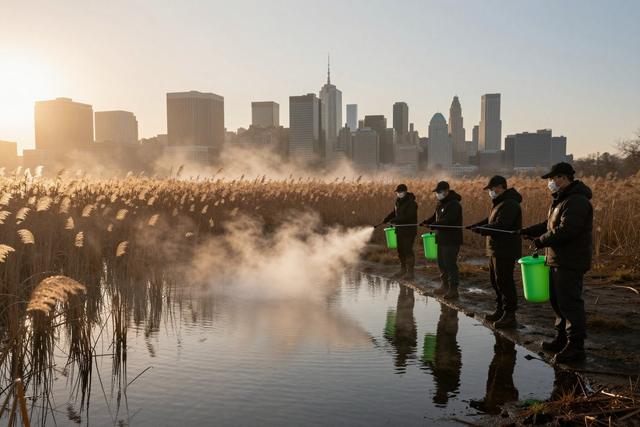
The New York City Health Department will begin aerial applications of mosquito larvicide next week, focusing on neighborhoods in Queens, Staten Island and the city’s wetlands. The operation aims to reduce populations of mosquitoes that carry West Nile virus.
The planned treatment involves low‑altitude flights that disperse a larvicidal agent over standing water where mosquito larvae develop. By targeting these breeding sites, officials hope to interrupt the life cycle of the virus‑bearing insects before they mature into adult mosquitoes capable of transmitting disease.
City health officials cited recent seasonal spikes in West Nile virus–carrying mosquitoes as the impetus for the intervention. Data collected over the past weeks show an increase in the number of infected vectors across multiple boroughs, prompting a coordinated response under the department’s vector‑control program.
The selected areas include both densely populated districts in Queens and Staten Island as well as protected wetland habitats that serve as natural breeding grounds. While the treatment will cover a broad geographic scope, the department emphasized that the larvicide used is approved for public health applications and poses minimal risk to humans, pets and wildlife when applied according to regulatory guidelines.
Residents in the affected zones will be notified of the flight schedules and advised to keep windows closed during operations to limit exposure to any airborne particles. The health department also reminded the public that personal protection measures—such as using insect repellent and eliminating standing water on private property—remain essential components of West Nile virus prevention.
The aerial larviciding effort is part of a larger seasonal strategy to manage mosquito populations and curb the spread of West Nile virus throughout New York City. Officials will continue to monitor mosquito activity and adjust control measures as needed throughout the summer months.