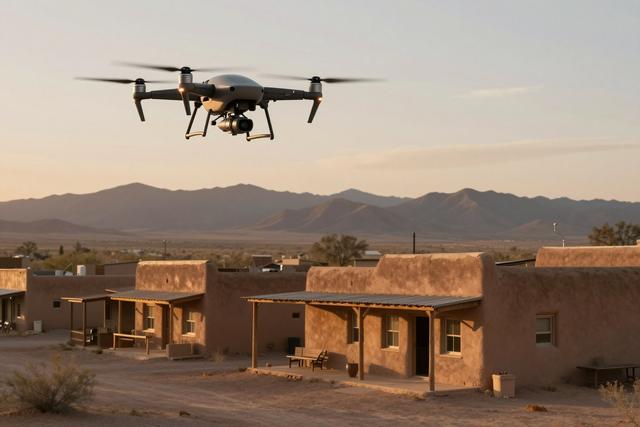
On Thursday, September 24, 2026, a fleet of Predator unmanned aircraft began flying surveillance loops over several towns along Arizona’s southern border. The flights are part of Operation Ardent Vanguard, a coordinated effort that brings together the U.S. Army, the Department of Homeland Security and U.S. Northern Command to reinforce border security in the region.
The drones, originally designed for combat missions in overseas war zones, are being repurposed for domestic monitoring. Their flight paths cover multiple border communities, providing continuous aerial imagery that is fed to federal agencies tasked with detecting illegal crossings and other security threats. Officials describe the operation as a “joint military‑homeland security” initiative intended to fill gaps in existing ground‑based observation.
Privacy advocates have publicly voiced concern about the use of warzone‑type technology on U.S. soil. They argue that the persistent aerial surveillance raises questions about the balance between national security and individual privacy rights, especially in populated border towns where residents may be recorded without consent. While the agencies involved have not released specific data on the number of flights or the extent of imagery collected, they maintain that the program complies with existing legal frameworks governing domestic surveillance.
The deployment marks a notable shift in how the federal government approaches border enforcement, moving from traditional ground patrols to high‑technology aerial platforms. Critics note that the introduction of armed‑origin drones could set a precedent for future domestic applications of military equipment. Proponents counter that the enhanced situational awareness provided by the Predator system is essential for responding to the complex challenges faced along the nation’s southern frontier.
As the operation proceeds, both federal partners and civil‑rights groups say they will continue to monitor the program’s impact on security outcomes and community privacy. The ongoing dialogue reflects broader national debates over the role of advanced surveillance tools in everyday life.