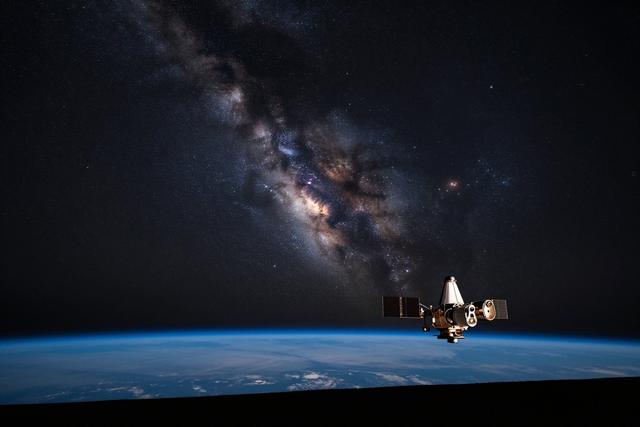
On September 15, 2026, Air Force Secretary Troy E. Meink publicly confirmed that the United States has placed weapons in Earth’s orbit. The announcement was made as part of a broader national defense briefing and emphasized that the deployment is intended to counter potential adversary capabilities in space.
Meink stated that the decision reflects a strategic assessment of emerging threats and the need to ensure the United States can protect its interests beyond the planet’s surface. He described the orbital weapons as a component of a layered defense posture designed to deter hostile actions and maintain stability in the increasingly contested space environment.
The confirmation marks the first public acknowledgment by a senior Department of Defense official that the U.S. military now operates offensive or defensive systems beyond the atmosphere. While specific details about the type, number, or operational parameters of the weapons were not disclosed, the statement underscored that the deployment aligns with existing policies aimed at preserving freedom of operation in space.
The move arrives amid growing international discussion about the militarization of space and the development of comparable capabilities by other nations. By announcing the presence of weapons in orbit, the Air Force signaled a willingness to match or exceed potential adversary deployments, thereby reinforcing deterrence.
Officials indicated that the weapons are integrated into the United States’ global defense architecture and will be managed under established command and control structures. The deployment is presented as a precautionary measure, intended to protect national security rather than to provoke conflict.
Analysts note that the public acknowledgment could influence diplomatic and strategic calculations worldwide, as countries reassess the balance of power in orbit. The Air Force’s statement reinforces the message that the United States is prepared to defend its interests wherever they may be threatened, including the space domain.
The announcement is expected to shape future policy discussions on space security and may prompt additional legislative or international dialogue regarding the role of weapons in orbit.