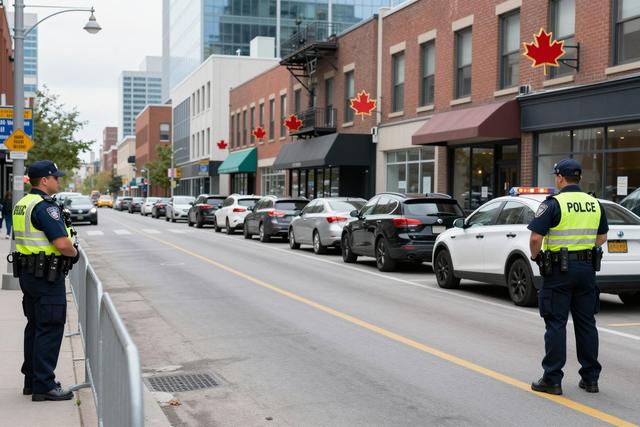
Councillor Chris Moise announced that the nine‑week summer pilot that closed a portion of Church Street to motor traffic has exceeded its original financial plan, largely because police patrols have cost twice the amount anticipated. The pilot, launched to promote walking and outdoor activity, was allocated $150,000 for its duration. However, the city now reports that policing fees alone have risen to $300,000, pushing the total expense well beyond the initial estimate.
The pilot began at the start of the summer of 2026 and was intended to run for nine weeks. Its purpose was to create a temporary pedestrian‑only zone on Church Street, encouraging residents and visitors to use the street for recreation and to experience a car‑free environment. While the concept attracted interest, the unexpected rise in security costs has become a significant financial obstacle.
According to the latest figures, the policing component alone accounts for double the budgeted amount for the entire project. The city had not foreseen such a steep increase, and the extra $150,000 in police expenses now represents the largest single cost driver of the pilot. Councillor Moise highlighted that this shortfall could limit the municipality’s ability to replicate similar car‑free experiments on other streets across Toronto.
City officials note that the additional policing spend was required to maintain safety and order in the newly pedestrianized area. The higher-than‑expected cost underscores the challenge of balancing public space initiatives with the operational expenses of law enforcement. As Toronto evaluates the outcomes of the Church Street experiment, the financial impact of policing will be a key factor in decisions about future pedestrian‑only projects.
The pilot’s budget overrun serves as a cautionary example for other neighborhoods considering similar car‑free zones. Policymakers will need to account for potential policing fees when planning and funding future initiatives aimed at expanding pedestrian spaces throughout the city.