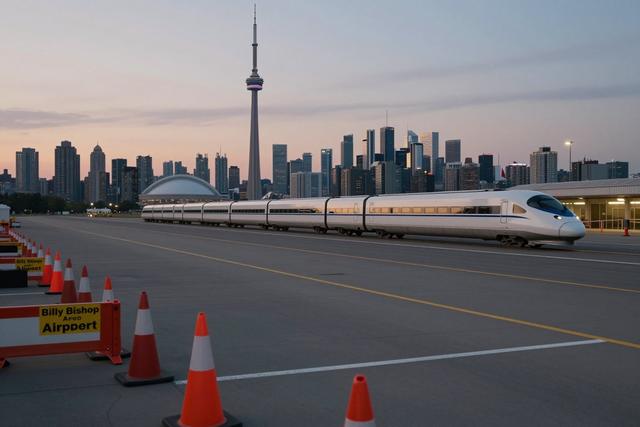
The federal government’s decision in July 2026 to deny a proposal allowing commercial jet operations at Toronto’s Billy Bishop Airport has prompted the Ontario government to revisit its backing of a province‑wide high‑speed rail initiative. The rejection, issued by Ottawa, has heightened tensions between Prime Minister Justin Trudeau’s administration and Premier Doug Ford’s government, raising questions about the future of the rail project that was intended to link major Ontario cities.
Ontario’s support for the high‑speed rail line has been a cornerstone of the Ford administration’s transportation agenda, promising faster connections between urban centres and a shift toward rail‑based travel. However, the airport dispute has introduced a new political calculus. Provincial officials now appear to be weighing the benefits of the rail scheme against the potential fallout from a perceived loss of influence over aviation policy in the Greater Toronto Area.
The Billy Bishop Airport proposal, which sought to expand the airport’s capacity for commercial jet service, was turned down by the federal cabinet after a review process. While the exact reasons for the denial were not detailed in public statements, the outcome has been interpreted as a signal that Ottawa will not readily endorse major changes to the airport’s operations without broader consensus. The provincial response has been to reassess financial and political commitments to the high‑speed rail project, with some observers suggesting that opposition to the rail line could gain momentum as the province seeks to protect its interests in the aviation sector.
The evolving stance underscores a growing friction point between provincial and federal priorities in Ontario’s transportation planning. As the Ford government deliberates its next steps, the high‑speed rail project faces an uncertain path, while the Billy Bishop Airport remains at the centre of a broader debate over how best to balance air travel expansion with other infrastructure ambitions in the region.