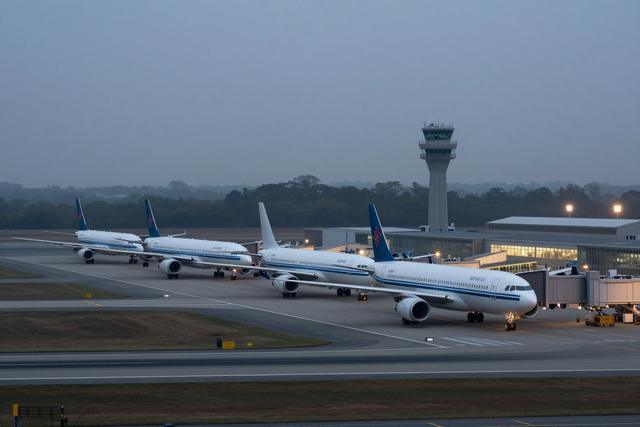
The Federal Aviation Administration announced a ground stop at Newark Liberty International Airport on Monday after a radar control system malfunction forced the suspension of departures and arrivals. The interruption, triggered by issues in the airport’s radar monitoring equipment, resulted in immediate flight delays throughout the day and extended to nearby Philadelphia Airport as traffic patterns adjusted to the disruption.
A ground stop is a standard safety protocol that halts aircraft movements on the ground when air traffic control systems cannot reliably track aircraft. In this case, the FAA’s radar system, which provides real-time position data for aircraft operating in the region’s airspace, experienced technical difficulties that prevented controllers from maintaining the required level of situational awareness. As a precaution, the agency ordered all aircraft on the ground at Newark to remain parked until the system could be restored.
The pause in operations affected travelers heading to and from the greater New York metropolitan area. With flights unable to take off or land as scheduled, passengers faced altered itineraries, longer wait times, and the need to seek alternative arrangements. Airlines responded by re‑booking affected customers and providing updates as the situation evolved. The ripple effect reached Philadelphia Airport, where airlines adjusted schedules to accommodate the shift in traffic flow caused by the Newark ground stop.
The FAA worked to diagnose and correct the radar issue, aiming to lift the ground stop as soon as safety could be assured. While the exact duration of the disruption was not disclosed, officials indicated that normal operations would resume once the radar system returned to full functionality. Travelers in the region were advised to monitor airline communications and airport announcements for the latest information on flight status and any further changes.
The incident underscores the reliance of modern air travel on robust radar and control technologies, and it serves as a reminder that technical failures can quickly translate into widespread schedule disruptions for passengers across multiple airports.