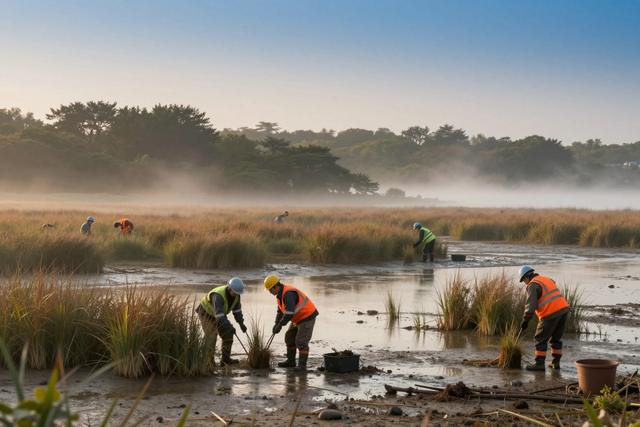
Stone Harbor Wetlands Institute will temporarily cease public operations in 2026 while it undertakes a restoration of five acres of tidal salt marsh on its property in Stone Harbor, Cape May County, New Jersey. The closure is intended to allow crews to work on the marsh without interruption and to ensure the health of the ecosystem being restored.
The project focuses on reestablishing natural tidal flows and planting native salt‑marsh vegetation across the five‑acre site. By restoring these wetlands, the institute aims to improve habitat conditions for diamondback terrapins, a species that relies on brackish marshes for foraging and nesting, as well as for a variety of coastal bird species that use the area for feeding and roosting.
County officials have identified the marsh restoration as a component of a broader climate‑resilience strategy for Cape May County. Restored tidal marshes can absorb storm surge, reduce flooding, and sequester carbon, contributing to regional efforts to adapt to rising sea levels and more frequent extreme weather events.
The institute’s management plans to coordinate the work with local environmental groups and state agencies to ensure that restoration techniques meet current best practices. While the institute remains closed to visitors, staff will continue monitoring water quality and wildlife activity in adjacent areas to track any indirect impacts.
When the restoration is complete, the Wetlands Institute expects to reopen its facilities with an enhanced natural landscape that supports both education and conservation. The upgraded marsh is projected to provide a more robust refuge for terrapins and birds, while also serving as a living demonstration of the county’s commitment to climate adaptation.
The temporary closure reflects a trade‑off between short‑term public access and long‑term ecological benefits, aligning the institute’s mission with the county’s climate‑resilience objectives.