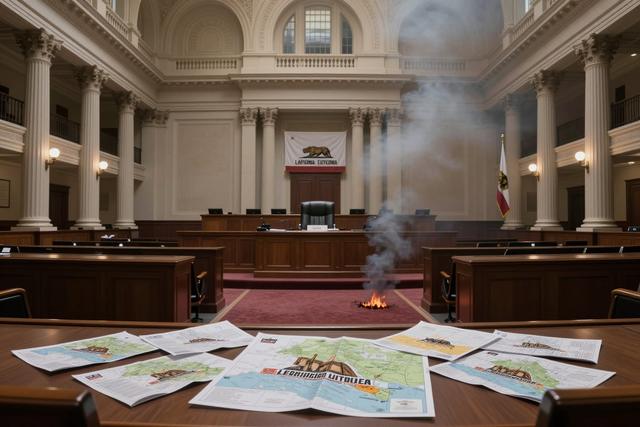
California state legislators voted on August 26, 2026 to reject major provisions of Governor Gavin Newsom’s wildfire legislation. The rejected measures would have lowered the compensation paid to survivors of recent fires and limited the financial liability of utility companies involved in fire prevention and response.
The provisions targeted for rejection included language that would have reduced the amount of payouts available to fire victims and imposed caps on the responsibility of utility firms for costs associated with wildfire damage. Those changes were part of a broader amendment package introduced by the governor in the final days before the legislative session concluded.
Governor Newsom presented the last‑minute amendments as an effort to curb what he described as escalating payouts to fire survivors and to shield utility providers from growing financial exposure. The adjustments were positioned as a means to balance fiscal concerns with the ongoing need to address wildfire risk across the state.
Lawmakers opposed the proposals, arguing that limiting survivor compensation and reducing utility liability would undermine support for those affected by recent blazes. The opposition centered on the belief that fire victims should retain full access to state‑provided assistance and that utilities should remain accountable for their role in fire prevention and mitigation.
The debate occurs amid continued statewide focus on wildfire preparedness, recovery funding, and the role of private energy firms in fire management. Lawmakers’ decision to block the governor’s changes reflects ongoing legislative scrutiny of how best to allocate resources and assign responsibility in the wake of increasingly severe fire seasons.
With the key provisions rejected, the governor’s wildfire policy will proceed without the contested reductions in survivor payouts and utility protections. Further legislative action may be required to address the broader goals of the governor’s wildfire agenda.