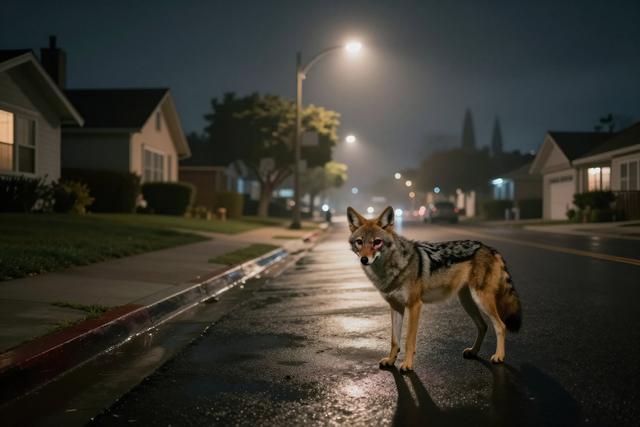
A wildlife nonprofit is asking residents of Studio City to assist in locating a semi‑wild coyote that has been observed in the neighborhood for more than a year but now requires urgent medical attention. The animal, which has become a familiar sight to local households, is suffering from a facial abscess or growth that has persisted and is now considered serious enough to need professional care.
Wildlife Care of Southern California, together with the East Valley animal shelter, issued the request on Wednesday, August 26, 2026, at 11:45 a.m. The organizations said the coyote’s condition has worsened and that prompt treatment is essential to prevent further complications. They emphasized that the animal is not fully domesticated but has grown accustomed to the urban environment, making it a unique case for wildlife rehabilitation.
The call for assistance is directed toward local residents who may have seen the coyote in recent days. The groups hope that community members can provide information on the animal’s whereabouts, enabling capture and transport to a facility where veterinary staff can address the facial issue. No specific details about the coyote’s age, gender, or exact location have been released beyond the general Studio City area.
Both Wildlife Care of Southern California and the East Valley shelter have experience handling wildlife that ventures into residential zones and have previously coordinated rescues of similar animals. They noted that timely identification of the coyote’s location will aid in arranging safe capture and ensuring the animal receives the necessary treatment without further stress.
The appeal underscores the collaborative effort between nonprofit wildlife groups and the public in managing health concerns of urban‑dwelling wildlife. By locating the coyote, the organizations aim to provide the medical care required to address the long‑standing facial condition and improve the animal’s chances for recovery.
Residents who have recent sightings are encouraged to contact the wildlife groups directly to share any observations that could lead to the coyote’s safe retrieval and treatment.