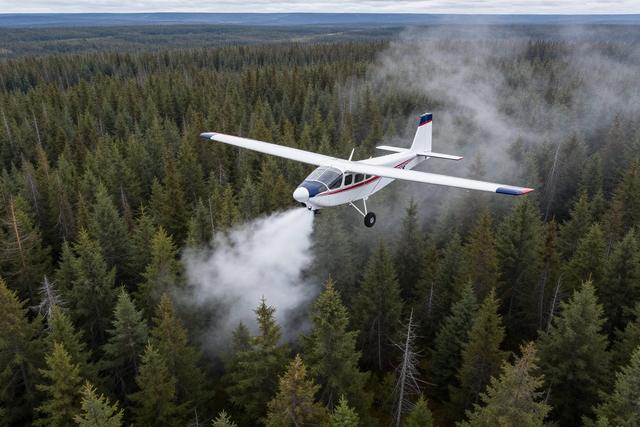
In July 2026, aircraft crews began dispersing the biological insecticide Bacillus thuringiensis kurstaki (Btk) across more than 627,000 hectares of forest in Quebec. The operation, carried out from the air, is intended to halt a persistent spruce budworm outbreak that has been damaging the province’s woodlands.
The decision to use Btk follows a season of extensive monitoring that confirmed the pest’s spread across a large swath of the region. Authorities opted for an aerial application because it allows rapid coverage of vast, often inaccessible terrain. By releasing the agent from planes, officials can treat the affected area in a single coordinated effort, reducing the time the larvae have to feed on spruce foliage.
The spruce budworm, a native moth whose larvae consume the needles of spruce and fir trees, has historically caused periodic defoliation events in eastern Canada. In recent years, the insect’s population has surged, prompting concerns about long‑term forest health, timber yields, and associated wildlife habitats. The current program represents one of the largest deployments of Btk in the province, reflecting the scale of the infestation.
Btk is a microbial pesticide that targets caterpillars while leaving most other organisms unharmed. Its use is considered environmentally responsible compared with synthetic chemicals, and it has been approved for forest pest management in Canada. The aerial spray aims to reduce larval numbers before they can cause severe defoliation, thereby protecting both commercial timber resources and the broader ecosystem.
While the exact impact of the July operation will be measured in the months ahead, officials expect that treating the 627,000‑hectare area will significantly curb the budworm’s advance. Ongoing surveillance will determine whether additional treatments are required later in the season or in future years.
The large‑scale response underscores the province’s commitment to preserving its forested landscape amid recurring pest challenges, using a method that balances effectiveness with ecological considerations.