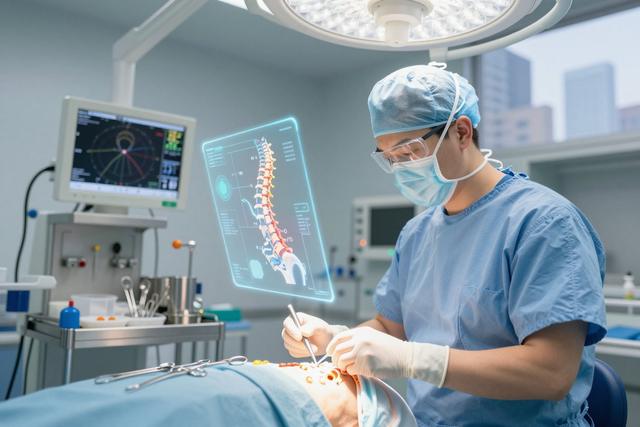
Orthopedic surgeons at the Centre hospitalier de l’Université de Montréal (CHUM) employed an AI‑integrated technology on Tuesday to correct a severe spinal curvature in an elderly patient. The procedure, performed at the Montreal hospital, represents a practical application of artificial intelligence in addressing complex scoliosis cases.
The surgical team used the innovative system to map the patient’s spinal anatomy and guide the correction of the deformity. By integrating AI analysis with traditional orthopedic techniques, the surgeons aimed to achieve a more precise alignment than conventional methods typically allow. The patient, identified only as an elderly individual, benefitted from the technology’s capacity to process imaging data and suggest optimal corrective actions during the operation.
Health officials note that scoliosis incidence rises with age, making effective treatment increasingly important as the population ages. The successful use of AI‑assisted tools at CHUM underscores a broader shift toward advanced surgical solutions designed to improve outcomes for older adults facing spinal disorders. As the prevalence of age‑related scoliosis grows, hospitals are seeking methods that can reduce operative risk and enhance postoperative recovery.
The CHUM case adds to a growing body of evidence that artificial intelligence can support surgeons in real‑time decision making. By providing detailed, data‑driven insights, the technology helps clinicians navigate the complexities of spinal curvature correction, which often involves delicate adjustments to vertebral positioning.
While the specific long‑term results of this particular surgery will be monitored, the immediate achievement demonstrates the potential for AI to become a standard component of orthopedic practice. The initiative aligns with ongoing efforts to modernize surgical care and address the health challenges posed by an aging demographic in Quebec and across Canada.
The adoption of AI‑integrated systems at CHUM reflects a commitment to leveraging emerging technologies to meet the evolving needs of patients with complex musculoskeletal conditions, marking a notable step forward in the province’s healthcare innovation agenda.