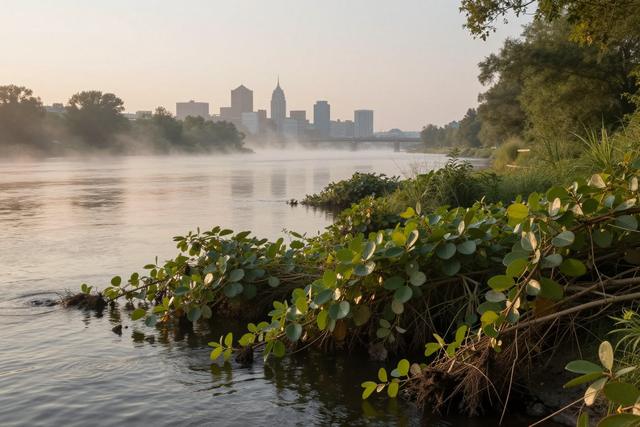
Biologists and members of the Vaudreuil‑Soulanges Watershed Council began hand‑pulling water chestnut plants on the Ottawa River and Lake of Two Mountains early Saturday, September 12, 2026, as part of an effort to eradicate the invasive species from local waterways.
The manual removal took place in the Vaudreuil‑Soulanges area of Quebec, targeting the dense mats of water chestnut that have become established in the river and lake. Participants worked along the shoreline and in shallow water, extracting the plants by hand to prevent further spread.
Water chestnut, an aggressive aquatic plant, can quickly dominate river and lake habitats in Quebec. Its thick floating leaves form a canopy that blocks sunlight from reaching submerged vegetation and other native aquatic organisms. By limiting light penetration, the plant threatens the health of the ecosystem, reducing habitat quality for fish, invertebrates and native plant species.
The removal effort reflects ongoing concerns about the plant’s rapid expansion across the province’s waterways. Without intervention, water chestnut can form extensive colonies that are difficult to control and can alter water flow and oxygen levels. The Vaudreuil‑Soulanges Watershed Council, working with biologists, aims to curb these impacts by eliminating existing growth before it can reproduce and spread further.
The coordinated hand‑pulling activity demonstrates a direct, low‑technology approach to invasive‑species management, complementing other control methods used elsewhere in the region. By targeting the Ottawa River and Lake of Two Mountains, the teams hope to protect the native aquatic community and maintain the ecological balance of these important water bodies.
Continued monitoring and additional removal sessions are expected as part of the broader strategy to manage water chestnut throughout Quebec’s river and lake systems.