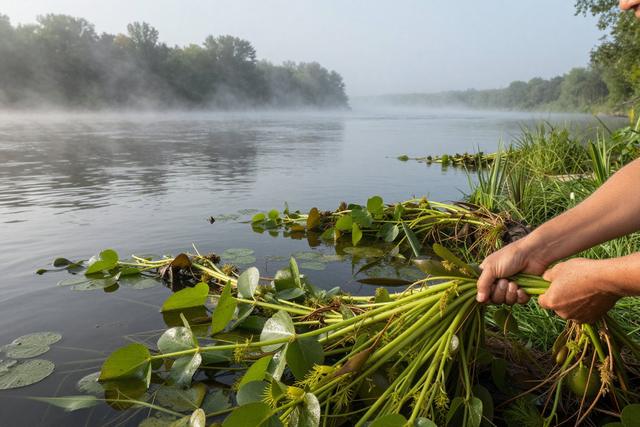
On Saturday morning, biologists teamed up with the Vaudreuil‑Soulanges Watershed Council to manually remove water chestnut plants from the Ottawa River and the adjoining Lake of Two Mountains. The effort, carried out in the Vaudreuil‑Soulanges area of Quebec, aims to eradicate the invasive species that has been spreading rapidly through the region’s waterways.
Water chestnut, an aggressive aquatic plant, creates thick mats that float on the water’s surface. These dense layers prevent sunlight from reaching submerged vegetation, depriving native aquatic species of the light they need for photosynthesis and growth. By pulling the plants by hand, the volunteers hope to break up these mats and restore conditions favorable to indigenous flora and fauna.
The manual removal operation reflects a broader concern over the fast‑spreading nature of water chestnut across Quebec’s rivers and lakes. The species has demonstrated a capacity to dominate habitats quickly, outcompeting native plants and altering ecosystem dynamics. The biologists and watershed council participants are focusing on key entry points in the Ottawa River and Lake of Two Mountains, where the plant’s growth appears most concentrated.
While the hand‑pulling method is labor‑intensive, it allows for targeted removal without the use of chemicals that could further impact the delicate aquatic environment. The collaboration underscores a local commitment to protecting water quality and biodiversity in the face of an invasive threat that continues to challenge waterway managers throughout the province.