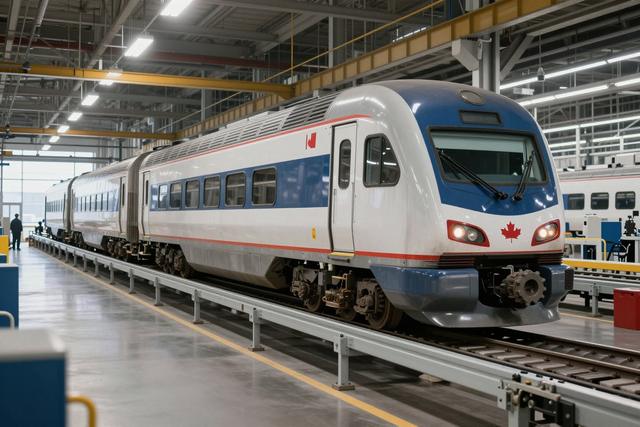
On September 3, 2026, the Government of Canada unveiled a spending package of more than $4.7 billion to acquire and maintain 313 new passenger rail cars for Via Rail. The entire order will be built in the provinces of Quebec and Ontario, marking a return to fully domestic production for the national rail operator.
The contract will be executed by Alstom Canada, which will handle the design, assembly and long‑term upkeep of the new fleet. By keeping the work within Canada, the project aligns with the federal Buy Canadian Policy and is intended to strengthen the country’s rail manufacturing sector.
The $4.7 billion investment covers both the purchase of the vehicles and the services required to keep them operational over their lifespan. The 313 cars are expected to replace aging equipment and expand capacity on existing routes, although specific deployment plans were not disclosed.
This funding represents the first occasion in four decades that all VIA Rail passenger cars will be produced entirely on Canadian soil. The decision follows a broader governmental push to revitalize domestic industry and create skilled jobs in the transportation and engineering fields.
Industry observers note that the scale of the program – more than $4 billion dedicated to a single rail operator – underscores the importance placed on modernising Canada’s intercity passenger network. The partnership with Alstom Canada also signals confidence in the company’s ability to deliver large‑scale, high‑technology rail solutions within the country.
The announcement was made jointly by officials from the Government of Canada, Via Rail and Alstom Canada, emphasizing a collaborative approach to the project. The new cars are slated to enter service in the coming years, contributing to a refreshed and more reliable passenger rail experience for Canadians.
The initiative is expected to generate a measurable boost to the manufacturing base in Quebec and Ontario, supporting the broader economic goals set out in recent federal policy statements.
Overall, the $4.7 billion commitment aims to modernise the national rail fleet while reinforcing Canada’s capacity to produce critical transportation equipment domestically.