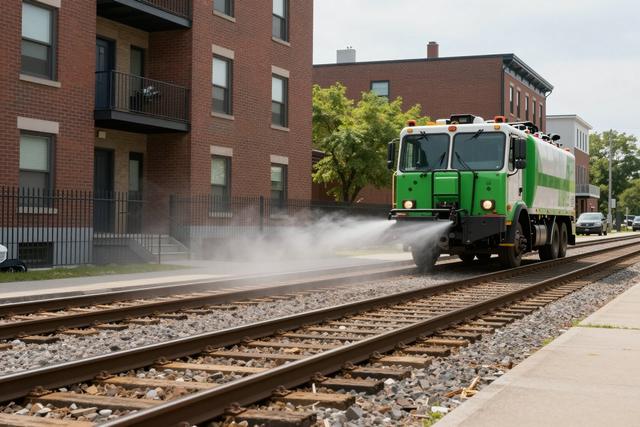
Canadian National Railway applied a herbicide treatment to railway tracks that run alongside the Mercier–Hochelaga-Maisonneuve neighbourhood in Montreal during July 2026. The operation was carried out without any advance notice to the surrounding residents, and the lack of warning prompted a series of complaints and a public protest by community members.
The chemical was spread along the right‑of‑way as part of a weed‑control effort intended to keep vegetation from encroaching on the rail line. CN has a long‑standing practice of treating its tracks with herbicides to maintain clear corridors for train operations and to reduce fire risk. The recent application, however, was conducted in close proximity to homes, a factor that residents said had not been communicated beforehand.
Local inhabitants voiced concerns that the untreated spray could affect air quality and the health of children playing nearby. They gathered outside the site, demanding that the railway company provide information about the type of herbicide used, the timing of future applications, and any safety measures in place. The protest highlighted a broader desire for transparency when chemical treatments are performed near residential areas.
While the railway’s routine maintenance schedule includes regular weed‑control measures, the incident underscores the tension that can arise when such activities intersect with densely populated neighbourhoods. The community’s response reflects a demand for prior notification and clearer communication about the environmental impact of herbicide use along city rail corridors.