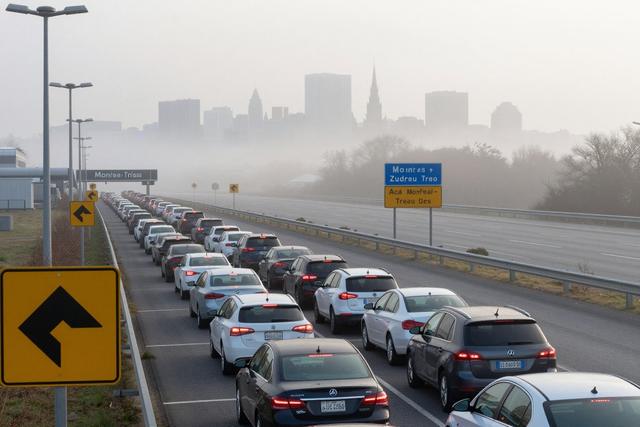
On July 13, 2026, motorists traveling to Montreal‑Trudeau Airport encountered unusually long wait times on the final stretch of the airport access road. The congestion extended over the last 1.5 kilometres leading to the terminal, with travel times stretching to as much as forty minutes, according to observations made that day.
Drivers reported that the short segment, typically traversed in a matter of minutes, became a bottleneck as vehicles formed extensive queues. The buildup of traffic was evident throughout the corridor, creating a visible line of cars that stretched for several kilometres before reaching the airport entrance.
The delay affected a range of travelers, from those heading to catch early flights to passengers arriving for later departures. With the access road essentially clogged, the additional time required to cover the 1.5‑kilometre distance added a significant variable to travel planning for anyone heading to the airport on that date.
While the cause of the congestion was not specified, the impact was clear: motorists had to adjust their schedules, allowing extra time for the journey to the terminal. The situation highlighted how a relatively short segment of road can become a critical point of slowdown when traffic volume exceeds the capacity of the route.
The incident serves as a reminder that even well‑established airport access routes can experience sudden spikes in travel time. Travelers heading to Montreal‑Trudeau Airport on July 13, 2026, were advised to consider the potential for extended travel on the final kilometre and a half of their trip, given the reported queues and the resulting forty‑minute delay.