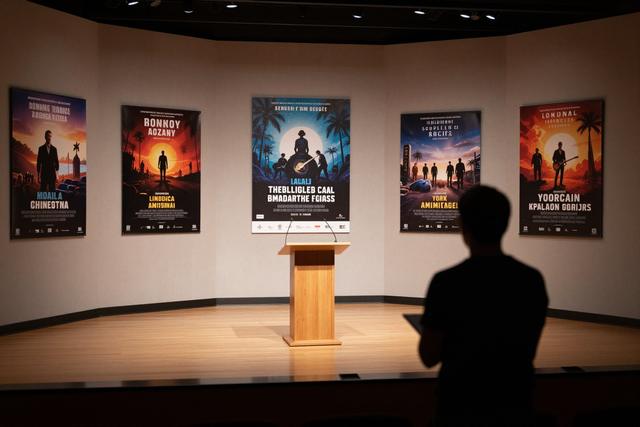
A free retrospective lecture honoring illustrator Donald Caron will take place on July 20, 2026, at the York Amphitheatre on the Concordia University campus in Montreal. The event marks the 30th anniversary of the Fantasia Festival and celebrates Caron’s three‑decade tenure creating posters for the Montreal International Film Festival.
Caron has been responsible for the visual identity of the Montreal International Film Festival since 1997. Over the years his posters have become a recognizable element of the festival’s branding, linking the event’s programming with a distinctive graphic style. The upcoming lecture will review his body of work from its inception in 1997 through the present, highlighting the evolution of his designs and their role in the festival’s public image.
The Fantasia Festival, which is reaching its 30th year, partnered with Concordia University to host the free presentation. Organizers indicated that the lecture is intended to acknowledge Caron’s long‑standing contributions and to provide audiences with insight into the creative process behind the festival’s visual communication.
The York Amphitheatre, a venue on Concordia’s downtown campus, will accommodate the public lecture. Admission is free, and the event is open to anyone interested in film, graphic design, or the history of the festival’s promotional materials. Attendees can expect a curated selection of Caron’s poster artwork, accompanied by commentary on the design choices that have defined the festival’s aesthetic for three decades.
By aligning the lecture with the festival’s milestone anniversary, the organizers aim to underscore the importance of visual branding in the cultural life of Montreal. The event also serves as a reminder of the collaborative relationship between the Fantasia Festival, Concordia University, and the broader artistic community that supports the city’s film culture.
The free lecture on July 20 will be the first public showcase dedicated exclusively to Caron’s poster legacy, offering a rare opportunity for the public to engage directly with the work that has shaped the festival’s visual identity since its early years.