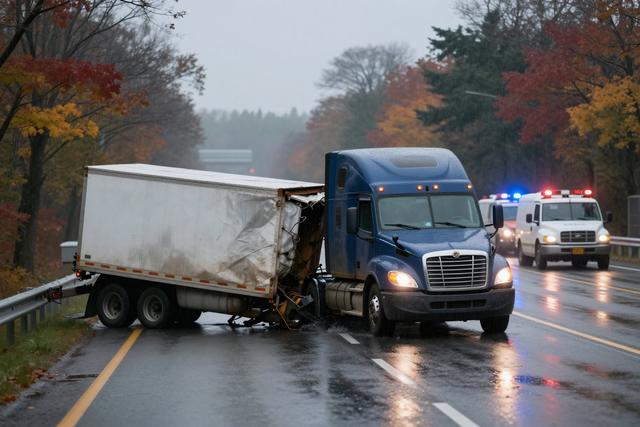
Federal authorities in Canada lack the power to sanction non‑compliant trucking firms, an internal Employment and Social Development Canada document reveals, and the shortfall has been linked to a series of serious road accidents across Quebec.
The confidential report, produced by Employment and Social Development Canada, states that existing mechanisms do not allow the federal government to enforce penalties against trucking companies that fail to meet regulatory standards. The document highlights that this regulatory gap has become a contributing factor in multiple severe crashes that have occurred in the province over recent months.
The report cites several incidents in which trucks operating without proper compliance have been involved in collisions resulting in injuries and fatalities. While the exact number of accidents is not detailed, the language of the document emphasizes a pattern of dangerous behavior by firms that remain unchecked by federal oversight.
Mylène Crête, whose name appears in the internal assessment, is referenced in connection with the discussion of enforcement challenges. The document does not provide further biographical information about Crête, but her inclusion underscores the personnel involved in reviewing the enforcement shortfall.
Federal officials have acknowledged the limitations outlined in the internal analysis, noting that the current legislative framework restricts the ability to impose sanctions on trucking operators that breach safety regulations. The acknowledgment comes amid growing public concern over road safety in Quebec, where the province has seen a noticeable rise in serious accidents involving commercial vehicles.
The Employment and Social Development Canada report calls for a review of existing powers and suggests that strengthening federal enforcement capabilities could reduce the risk of future crashes. However, no specific timeline or legislative proposal has been announced at this stage.
Stakeholders, including provincial authorities and industry groups, are expected to examine the findings as they consider measures to improve compliance and protect motorists on Quebec’s highways.