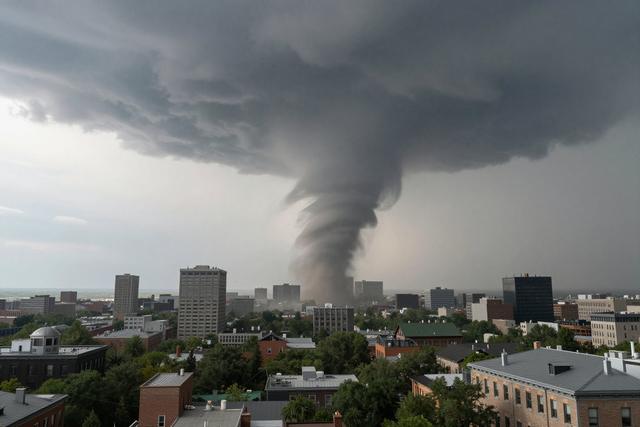
In July 2026, Quebec endured a series of severe weather episodes that included multiple tornadoes, unusually large hailstones and short bursts of elevated heat, even though the month’s average temperatures stayed close to the usual July range.
Meteorological services recorded several tornadoes forming across different parts of the province during the month. The rotating storms touched down in both rural and semi‑urban areas, producing localized damage to structures, trees and power lines. Emergency responders were mobilised to clear debris and restore electricity where the paths of the twisters intersected populated zones.
At the same time, hail events of notable size were reported. Observers noted stones that far exceeded the dimensions typical for the season, causing dents to vehicles, broken windows and injury to a few individuals who were caught outdoors. The hailstorms were brief but intense, often accompanying strong thunderstorms that also produced the tornadoes.
Heat spikes added another layer of concern. While July’s overall temperature profile for Quebec remained within the normal historical band, certain days saw temperatures climb well above the seasonal average for short periods. These brief heat waves prompted health advisories, especially for vulnerable populations, and led to increased demand for cooling resources in affected communities.
Provincial authorities emphasized that the combination of tornadoes, large hail and intermittent heat made July 2026 stand out from a typical summer month. Weather warnings were issued promptly, and public information campaigns reminded residents to seek shelter during severe storms and to stay hydrated during the hotter intervals.
Despite the unusual weather, the majority of the province experienced a summer that, in terms of average temperature, aligned with long‑term expectations. The exceptional events of July serve as a reminder of the variability that can occur even in months that appear otherwise ordinary on climate charts.