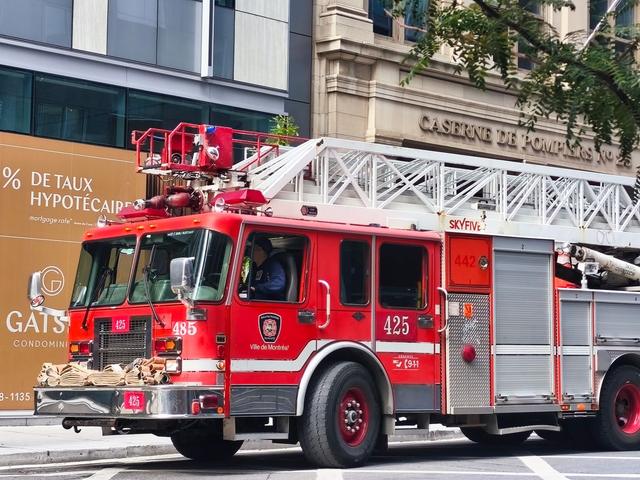
The Service de sécurité incendie de Montréal (SIM) announced that the total count of fires recorded in 2025 held steady compared with the previous year, even as incidents that occur outside of buildings showed a modest increase. The agency’s annual report highlighted that while overall fire activity did not rise, non‑structure blazes edged upward, a trend the service attributes to the growing number of homeless encampments across the city.
SIM’s yearly review of fire incidents shows that the aggregate number of fires has not changed significantly, indicating that preventive measures and public awareness campaigns have helped keep the city’s fire risk level consistent. However, the data also reveal a subtle shift in the locations where fires are starting, with a higher proportion taking place in temporary shelters, street tents and other makeshift dwellings that are not classified as conventional structures.
The increase in non‑building fires was described as slight but noteworthy by fire officials. They noted that these incidents often involve cooking equipment, heating devices or open flames used by people living in encampments. Because such settings lack the fire‑safety infrastructure of permanent housing, even a small rise can have outsized impacts on emergency response resources.
Richard Liebmann, a spokesperson for SIM, explained that the agency’s analysis points to encampments as the primary factor behind the uptick. He said the service is monitoring the situation closely and working with municipal partners to address fire safety in vulnerable communities. Liebmann emphasized that the goal is to reduce the risk of fire spread while respecting the needs of people experiencing homelessness.
The report underscores SIM’s ongoing role in tracking fire trends across Montreal and provides a baseline for future safety initiatives. By separating overall fire numbers from those occurring in non‑structural settings, the department aims to target resources where they are most needed and to inform city policies that balance public safety with social support for the homeless population.
The stability in total fire incidents suggests that broader fire‑prevention strategies remain effective, even as the city confronts the specific challenges posed by an increase in encampment‑related blazes.