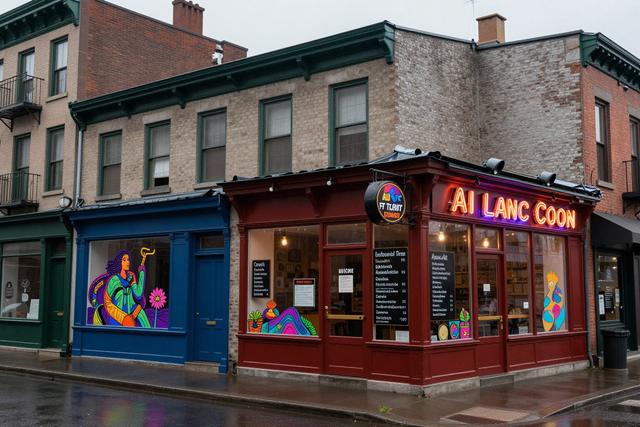
Montreal merchants are filling the city’s storefronts with visual content produced by artificial intelligence, according to observations made on Thursday, July 30, 2026. The materials, which include signs, menus and advertisements, are being generated quickly and at low cost, leading to a noticeable increase in what critics are calling “AI slop.”
Local businesses are turning to AI design tools to create these images, replacing traditional graphic design processes. The tools allow shop owners to produce visual assets within minutes, a speed that many cite as a key advantage. The resulting graphics, however, are often described as low‑quality, with a uniform aesthetic that stands out across the city’s streets.
Pascale Lévesque, speaking on behalf of a coalition of Montreal merchants, confirmed that the shift toward AI‑generated visuals is driven by the need for rapid and affordable design solutions. Lévesque noted that the technology enables small retailers to update promotional material without hiring external designers, a factor that has accelerated adoption throughout the metropolitan area.
Media commentators have responded to the proliferation of these AI‑created images with criticism, arguing that the flood of low‑resolution or generic graphics diminishes the visual character of neighbourhoods. The term “AI slop” has emerged in reporting to describe the perceived drop in quality associated with mass‑produced, algorithm‑driven artwork.
The broader context reflects a growing trend in which AI design platforms are replacing conventional graphic creation across various sectors. In Montreal, the ease of access to these tools has prompted many storefronts to replace hand‑crafted or professionally designed signage with automatically generated alternatives, reshaping the visual landscape of the city’s commercial districts.