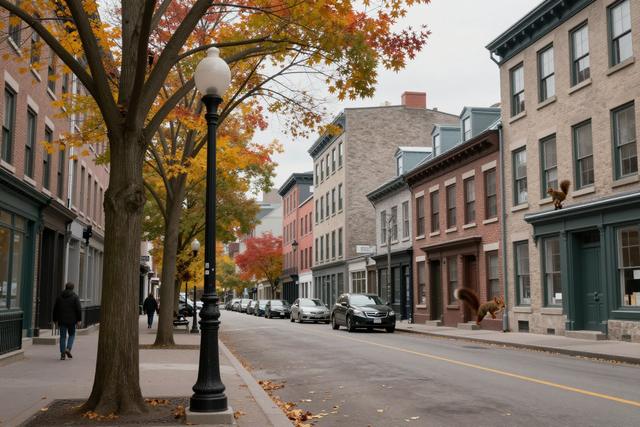
Squirrels in Montreal have been observed changing fur color according to the neighborhoods where they live, a pattern noted across the city on Thursday, 24 September 2026. Researchers and naturalists report that the animals’ coats vary in hue from one district to another, reflecting the influence of local environmental conditions.
The phenomenon appears linked to Montreal’s diverse microclimates and habitats. In areas with denser canopy cover and cooler, more humid conditions, squirrels tend to display darker, richer tones, while those residing in open, sun‑exposed neighborhoods exhibit lighter, more reddish fur. The variations correspond to the differing levels of shade, temperature fluctuations, and vegetation types that characterize each part of the city.
Observers have documented these shifts by comparing squirrel populations in distinct boroughs, noting consistent patterns that align with the known ecological differences of the neighborhoods. The findings suggest that the physical traits of urban wildlife can respond directly to the immediate surroundings, even within a single metropolitan area.
Montreal’s varied landscape, ranging from parklands and riverbanks to densely built residential blocks, creates a mosaic of microhabitats. These small‑scale environments affect factors such as food availability, predator presence, and exposure to elements, all of which can influence animal coloration over time. The observed color changes in squirrels provide a visible indicator of how urban ecosystems adapt to localized conditions.
The discovery adds to a growing body of evidence that city wildlife is not uniform but reflects the nuanced environmental gradients present within urban boundaries. By tracking these adaptations, scientists hope to gain deeper insight into the resilience and flexibility of species navigating the challenges of city life.
While the observations are recent, they underscore the importance of monitoring urban biodiversity. Continued study of Montreal’s squirrels may reveal further connections between neighborhood characteristics and wildlife traits, offering a clearer picture of how city planning and environmental stewardship intersect with the natural world.