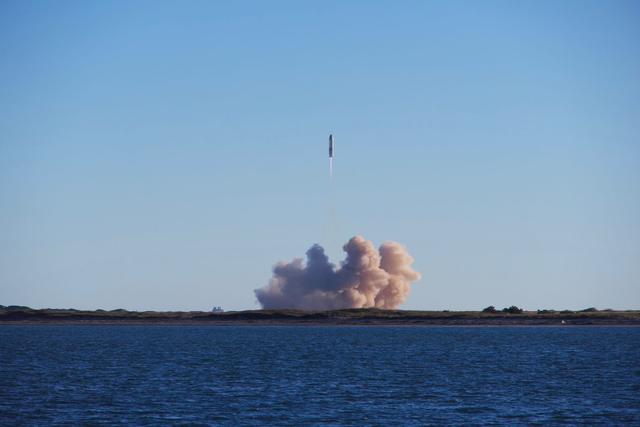
NASA lifted off the Nancy Grace Roman space telescope on August 30, 2026, in a ceremony that drew attention in Montreal. The mission, designed to expand the search for worlds beyond our solar system, marks a notable collaboration between the U.S. agency and the province of Quebec.
The launch, announced a week earlier, was celebrated in Montreal as a point of pride for local scientists and engineers. While the rocket lifted from its usual launch complex, the presence of Quebec representatives underscored the province’s involvement in the project.
The Nancy Grace Roman telescope, named after NASA’s first chief astronomer, will employ advanced imaging technology to spot distant exoplanets and study their atmospheres. Its primary goal is to identify Earth‑like planets that could support life, adding a new layer to humanity’s understanding of the cosmos.
Two strong connections tie the telescope to Quebec. First, key components of the spacecraft were manufactured by Quebec‑based aerospace firms, reflecting the province’s growing role in high‑technology hardware production. Second, several research institutions in Quebec will receive data from the mission, enabling local astronomers to participate directly in the analysis of newly discovered planetary systems.
The partnership illustrates how regional expertise can contribute to large‑scale scientific endeavors. By integrating Quebec’s industrial capacity and academic talent, the Roman mission benefits from a broader base of knowledge and resources.
As the telescope begins its journey to a stable orbit, the scientific community anticipates a flood of data that could reshape theories about planet formation and habitability. The collaboration between NASA and Quebec serves as a model for future joint ventures in space exploration, highlighting how international and inter‑provincial cooperation can accelerate discovery.
The launch event in Montreal closed with remarks about the shared ambition to push the boundaries of what is known about the universe, a sentiment echoed by both NASA officials and Quebec scientists alike.