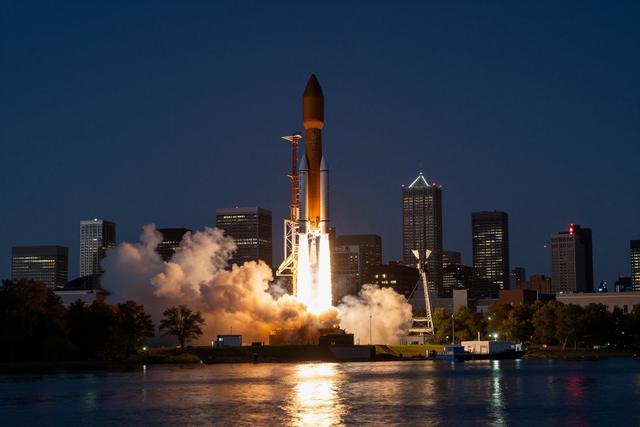
NASA lifted off the Nancy Grace Roman space telescope on August 30, 2026, marking the start of a mission dedicated to locating planets beyond our solar system. The launch, which took place a week ago, was closely followed by observers in Montreal, where interest in the observatory’s goals ran high. The telescope, named for the agency’s first chief astronomer, is designed to expand humanity’s ability to detect exoplanets and study their environments.
The Roman telescope’s connection to Quebec is highlighted by two strong links that tie the province to the project. While the specific nature of these connections has not been detailed publicly, officials noted that Quebec’s involvement is a point of pride for local scientists and engineers. The presence of these ties underscores the collaborative nature of modern space exploration, where contributions from various regions enhance the capabilities of large‑scale missions.
The launch follows a series of recent milestones for NASA as it prepares the telescope for its operational phase. Once in orbit, the observatory will employ wide‑field imaging to scan vast swaths of the sky, seeking the subtle dimming that signals an exoplanet passing in front of its host star. The data gathered is expected to broaden the catalog of known planets and provide insight into their composition and habitability. Montreal residents, alongside the broader Quebec scientific community, anticipate that the mission’s findings will inspire further research and educational opportunities within the province.