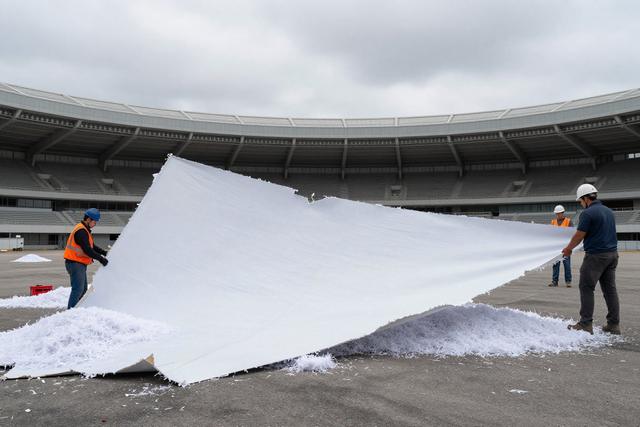
The majority of the former fabric that once draped Montreal’s Olympic Stadium has been shredded, with only a modest fraction set aside for reuse projects. The removal forms a key element of the ongoing renovation of the landmark venue, which has been a focal point of the city’s skyline since the 1976 Games.
Workers began dismantling the massive textile covering earlier this week, cutting it into strips before feeding it into industrial shredders. The process, carried out under the supervision of the stadium’s renovation team, aims to clear the site for the next phase of construction, which includes structural upgrades and the installation of a new roof system. While most of the material has been reduced to small pieces for disposal, 15 percent of the original fabric will be retained.
The retained portion is slated for a series of reuse initiatives. Officials involved in the project have indicated that the salvaged fabric will be repurposed in community‑focused applications, though specific details of the projects have not been released. The decision to keep a segment of the material reflects an effort to preserve a tangible link to the stadium’s history while moving forward with modernisation.
The fabric, installed in the 1970s, was an iconic feature that gave the stadium its distinctive appearance. Over the decades it endured exposure to harsh weather, leading to wear that contributed to the current renovation plan. By shredding the bulk of the covering, the renovation crew eliminates the need for costly removal of large, intact sections and reduces the volume of waste destined for landfill.
The demolition of the fabric marks a visible step in the broader transformation of the Olympic Stadium, a structure that continues to host sporting events and concerts. As the renovation progresses, the site will gradually take on a new look, with the remaining fabric serving as a reminder of the venue’s storied past.