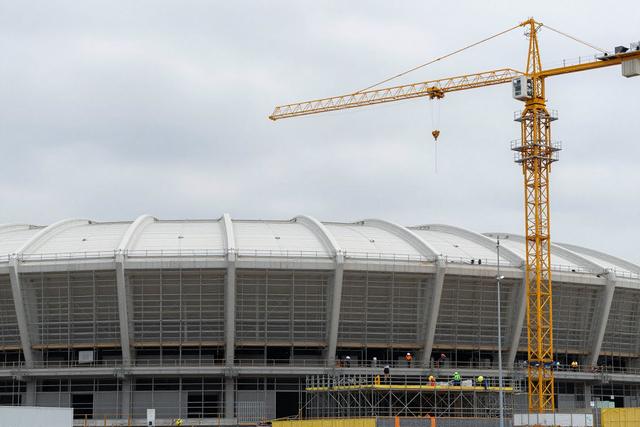
Quebec’s provincial government announced on Friday that it has formally approved an interior renovation project for Montreal’s Olympic Stadium, while also confirming that work to replace the venue’s problematic retractable roof with a permanent structure is proceeding.
The decision follows a long‑standing series of issues with the stadium’s original roof system, which has been described as faulty and unreliable since the venue opened. The province’s approval covers upgrades to the interior spaces of the arena, aimed at improving functionality and comfort for future events.
Officials noted that the roof replacement, already under way, will result in a fixed, permanent covering that eliminates the need for the former retractable mechanism. The move is intended to resolve the technical failures that have plagued the stadium for years and to provide a stable, weather‑proof environment for spectators and performers.
The Olympic Stadium, commonly referred to as the “Big O,” was built for the 1976 Summer Games and has since served as a landmark for sports and entertainment in Montreal. Over the decades, the venue’s roof problems have led to frequent closures, costly repairs, and a reputation for unreliability. By approving the interior renovation and confirming the permanent roof installation, the Quebec government aims to extend the life of the facility and restore confidence among event organizers.
While the province did not release a detailed timeline or budget for the interior work, it emphasized that the renovation will be coordinated with the ongoing roof project to minimize disruptions. The combined efforts are expected to enhance the stadium’s overall condition, making it more competitive for hosting large‑scale events in the future.
The announcement marks a significant step in the province’s broader strategy to address infrastructure challenges at one of Quebec’s most iconic sports venues, signaling a commitment to preserving the “Big O” for upcoming generations.
The renovation and roof replacement are part of a coordinated plan that the government says will bring the stadium up to modern standards, ensuring it remains a viable venue for both local and international gatherings.