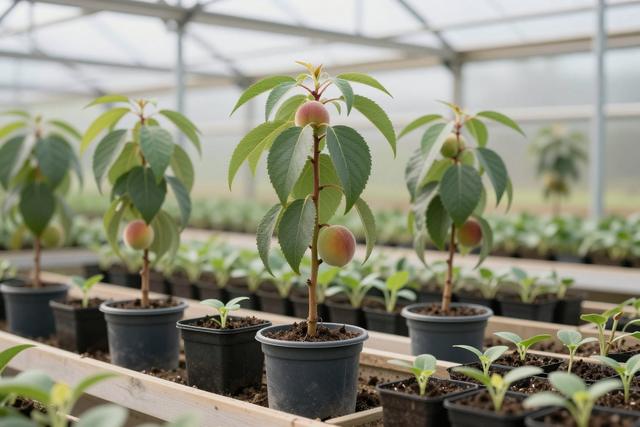
Marianne Crépeau of Aux Jardins de la Bergère farm planted peach and fig trees in an unheated, naturally lit greenhouse on the morning of June 9, 2026, aiming to see if these fruits, typically grown in southern Ontario, can thrive in Quebec.
The greenhouse, situated on the farm in Lanaudière, relies on ambient daylight and does not use supplemental heating. By introducing the trees into this environment, Crépeau is conducting a practical experiment to assess whether the climate inside such structures can support the development of stone and soft fruits that are not usually cultivated in the province.
The trial forms part of a broader movement among Quebec growers who are exploring greenhouse techniques to expand the diversity of locally produced fruit. While the province has a strong tradition of apple, berry, and cold‑weather fruit production, producers are increasingly interested in extending the growing season and introducing crops that historically required warmer conditions.
Crépeau’s effort focuses on two species: peach, a stone fruit that prefers warm, frost‑free periods, and fig, a soft fruit that also favors milder climates. By planting them without artificial heat, the experiment will reveal how much natural temperature variation within a greenhouse can be mitigated by the structure itself.
Results from the test will inform future decisions about crop selection and greenhouse design for Quebec farms. If the trees show healthy growth, it could encourage other producers to adopt similar unheated, naturally lit greenhouse setups, potentially broadening the market for locally grown peaches and figs.
The experiment underscores the province’s ongoing interest in adapting agricultural practices to meet changing consumer demand and climate considerations, while maintaining a focus on sustainable, low‑energy cultivation methods.